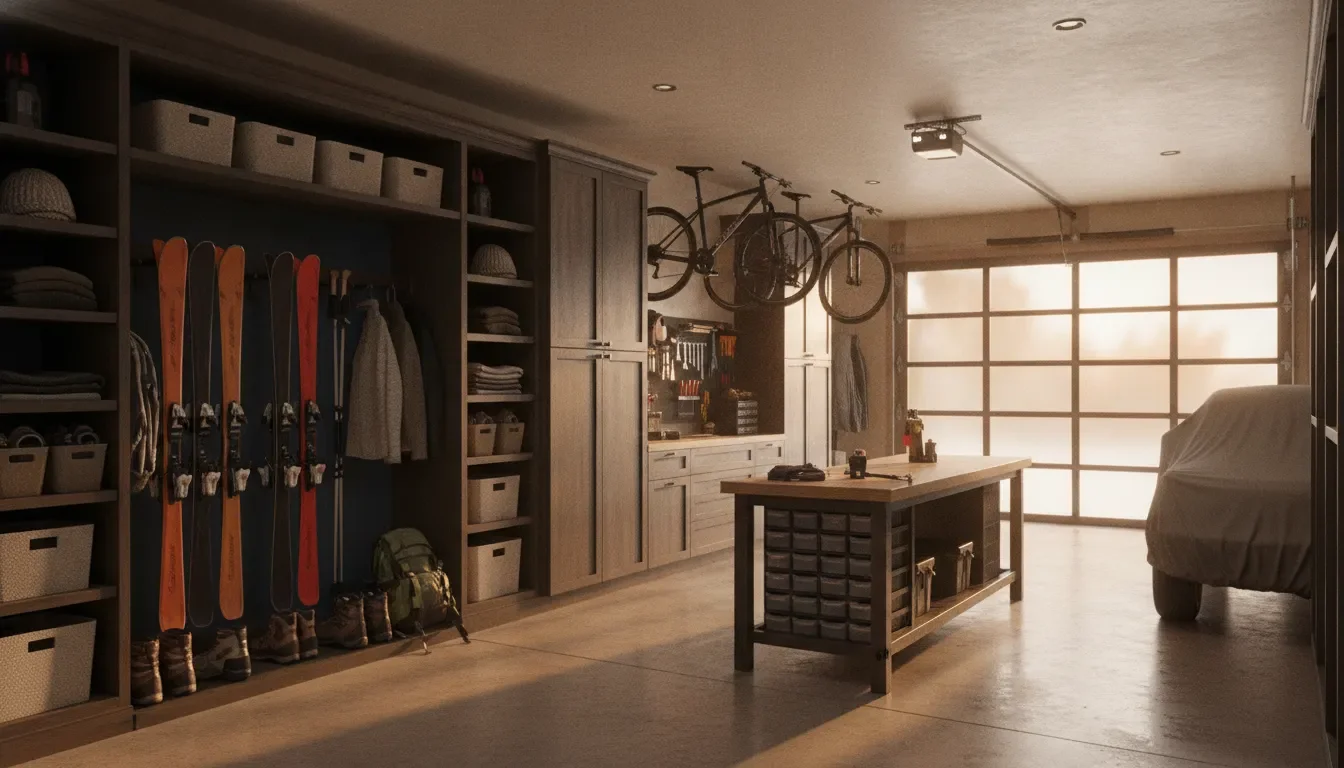
Garage Organization Systems for Mountain Homes
In a Colorado mountain home, the garage has to do more than shelter a vehicle. It may hold skis and boots, bikes, hiking equipment, tools, and seasonal supplies, often within the same tight footprint. Without a clear plan, daily departures become searches through mixed gear, and valuable floor space disappears.
Explore custom garage storage designed for the way your household moves.
The most effective garage organization systems begin with activity-based zones, then assign each item an intentional home. A ski and outdoor-gear zone near the entry can simplify preparation, while a tool zone near the work area keeps heavier equipment accessible without interfering with vehicle clearance. Custom cabinetry, shelving, and modular components can then be fitted to the garage's dimensions and the changing demands of mountain living.
The right starting point is not a catalog of products. It is a practical look at what your garage must make easier, safer, and more consistent every day.
What Should Garage Organization Systems Solve First?
Start with the routines your garage must support, not the number of cabinets it can hold. Inventory skis, bikes, hiking packs, helmets, tools, snow equipment, coolers, and household overflow. Note what the family uses weekly, shares, or stores for months. This simple list reveals which items deserve the easiest access.
List the equipment and supplies that belong in the garage.
Map the route from the interior door to the driveway and vehicle.
Assign high-use items to accessible zones before planning higher storage.
Next, map the path from the interior door to the vehicle and the driveway. Frequently used gear should sit close to the point where it leaves the house, so preparing for an outing does not require crossing the entire garage. Dedicated zones can simplify the transition from home to outdoor activity, while activity-based groupings, such as a ski zone or bike zone, can make preparation more predictable. A useful zone is defined by a routine, not merely by a category of objects.
Protect the daily workflow and vehicle clearance
Vehicle clearance is a nonnegotiable constraint. Measure door swings, walking lanes, vehicle mirrors, and the space needed to load a roof box or open a rear hatch. Keep floor storage out of the primary travel path, particularly where boots, bikes, or snow tools may be set down temporarily. Wall-mounted components can move equipment upward without consuming the floor area needed for vehicles and snow removal. High shelves or overhead storage may suit items that are bulky but rarely used when they can be accessed safely and do not interfere with doors. Lighting, garage doors, and vehicle clearance all deserve attention before shelving or overhead storage is installed.
Build around seasonal rotation
Colorado mountain garages often serve several seasons at once. Give current-season equipment the easiest reach, then assign a deliberate home for the next rotation. Winter gear might occupy an entry-adjacent wall in December, while paddle equipment, camping supplies, or bike accessories move forward in warmer months. Seasonal items that are used only occasionally can move higher or farther back, but they still need clear labels and a safe retrieval plan. This approach keeps the garage usable without pretending that every item deserves prime real estate.
Finally, leave room for the system to change. A growing family may add bikes, a new hobby may require different equipment, and a second-home garage may need to serve guests with different routines. High Country Closets designs bespoke organizational systems for luxury mountain homes, balancing equipment volume with a clean, streamlined appearance. Explore a custom garage storage plan when your zone map needs to account for the garage's exact dimensions, daily workflow, and mountain-season demands.
How Do You Build a Gear Zone for Skiing, Hiking, and Bikes?
High Country Closets recommends placing the gear zone close to the garage entry or the door leading into the home. This placement shortens the path between the vehicle, the mudroom, and the trail, so frequently used equipment is easier to retrieve without crossing the entire garage. Activity-based garage organization systems can also make preparation more consistent: skis and poles stay together. Hiking equipment has a defined home, and bike accessories do not disappear behind seasonal storage.
Keep high-use gear within reach
Use sturdy hooks, dedicated rails, or purpose-built cubbies for equipment that moves in and out of the garage every week. Skis can stand vertically in a supported rack, while poles, helmets, hydration packs, and hiking poles can hang at a height that works for the people using them. Place smaller essentials in nearby drawers or open compartments, but avoid putting daily gear behind a cabinet door if that extra step will encourage floor-level piles.
Leave enough space beneath hanging equipment for boots, snowshoes, or a drying mat. The goal is not to fill every section of wall. It is to create a predictable landing point for wet, bulky items after an outing. A dedicated gear zone can simplify the transition from home to outdoor activity, especially when several family members are preparing at once. See the custom garage organization systems available for storage planned around an active household.
Plan for airflow and changing conditions
Wet gloves, boots, outerwear, and bike components need breathing room. Avoid sealing damp equipment immediately in a tight cabinet, and do not position hooks so closely that air cannot move around the gear. Slatted surfaces, open shelves, and deliberate gaps can support drying while keeping the floor clear. In a Colorado mountain garage, moisture and temperature fluctuations deserve attention during the design stage, not after mildew or corrosion becomes a problem. A tray or durable floor surface beneath the zone can also contain drips during snow season.
Use vertical space for bikes and seasonal equipment
Bikes often consume valuable floor area when they lean against a wall. Wall mounts can hold frequently used bikes at an accessible height, while a properly installed ceiling hoist may suit bikes or equipment used less often. Keep loading paths, garage doors, lighting, and vehicle clearance in mind before selecting an overhead location. Ceiling-mounted storage is particularly useful for seasonal items because it preserves the working floor for cars and current gear.
Review the zone as the seasons change. Bring winter equipment down before the first storm, then move summer cycling accessories into the easiest reach when riding season begins. Reserve higher storage for items that will not be needed for several months. Adjustable components make that rotation less disruptive as hobbies, equipment, and household routines evolve.
Where Should Tools and Workshop Equipment Go?
High Country Closets plans tool storage around the way each household uses its workshop. Place the primary tool zone beside the workbench or project surface, rather than across the garage near the vehicle bays. A short route makes it easier to return a drill, clamp, or measuring tool after use. It also keeps active projects from spreading into walkways. A well-planned layout turns the workshop into a defined working area without sacrificing the garage's other functions.
Keep everyday tools visible and within reach
Wall-mounted organization can make frequently used tools easier to locate than a deep cabinet or crowded drawer. A pegboard, rail, or purpose-designed panel can hold hand tools at eye level, while enclosed cabinetry stores less attractive or less frequently used supplies. Group items by task, such as woodworking, home maintenance, or vehicle care, so the arrangement reflects your actual workflow instead of an arbitrary category system.
Use the wall above and beside the workbench for tools that support current projects. Reserve lower storage for heavier equipment, power-tool cases, and materials that are awkward to lift overhead. Steel shelving and sturdy wall organization are practical choices for heavy tools, but the mounting system must suit the wall construction and the equipment being stored. Fasteners and brackets should remain tight, especially when shelves or panels carry substantial weight.
Place heavy equipment low and preserve safe clearance
Large tools, compressors, shop vacuums, and material stock should sit on stable, low-level storage whenever possible. Keeping weight closer to the floor makes retrieval more controlled and reduces the need to lift bulky items above shoulder height. It also leaves upper wall space available for lighter accessories, extension cords, and seasonal items.
Before adding cabinets or shelving, map the clearance around the workbench, garage door, vehicles, and pedestrian route into the home. Doors and drawers need room to open fully. Long boards, ladders, and tool handles need a defined home so they cannot project into a walking path. Leave enough working space to carry equipment safely without brushing against parked vehicles or neighboring storage.
Choose shelving that can adapt to the workshop
A workshop rarely stays static. New equipment arrives, hobbies change, and the balance between hand tools and seasonal gear shifts over time. Adjustable shelves, movable components, and a combination of open and closed storage allow the system to evolve without forcing every item into a permanent position. Place open shelving where quick access matters, and use doors where dust control or a more streamlined appearance is important.
This is also where a tailored plan earns its value. A custom layout can account for bench height, wall dimensions, vehicle clearance, and the specific mix of tools in your household. Explore custom garage organization systems for a storage plan built around the work area. You can also review garage workshop storage ideas for another practical perspective on the project zone.
Which Materials Work in a Colorado Mountain Garage?
High Country Closets approaches material selection as part of the storage layout, not as a separate finish decision. A Colorado mountain garage may hold wet skis, muddy bikes, tools, and seasonal equipment while moving through significant temperature swings. The best garage organization systems balance a durable outer surface with sensible airflow, accessible maintenance, and a layout that keeps moisture from becoming trapped around stored gear.
| Material or feature | Practical advantage | Planning consideration |
|---|---|---|
| Powder-coated steel | Offers a hard, finished surface suited to active garage use. | Confirm that the system is properly secured and that the finish complements the surrounding cabinetry and home. |
| Finished cabinetry surfaces | Conceal visual clutter and create a cleaner, more tailored appearance for equipment that does not need to remain on display. | Choose surfaces that can be wiped clean, then allow wet or damp gear to dry before closing doors. |
| Open shelving | Keeps frequently used bins, boots, helmets, and tools visible and easy to reach. | Leave usable clearance around shelves and avoid packing damp equipment tightly together. |
Powder-coated metal for active storage
Powder-coated steel can be a practical choice where storage will handle regular contact with tools, bikes, skis, and other heavy gear. Its finished surface can support a consistent appearance across exposed components, but the coating does not replace good installation or thoughtful moisture management. Heavy items need mounts and fasteners suited to the application, with adequate clearance for vehicles and walking paths.
Cabinetry and shelving for moisture control
Cabinetry can give a mountain garage a more finished look while keeping less frequently used equipment out of sight. Open shelving serves a different purpose. It supports visibility and airflow around items that are used often, which can be helpful when snow, rain, or trail moisture comes home with the household. Moisture and ventilation deserve deliberate attention in alpine environments. Leave room around wet equipment, use open areas where drying is needed, and avoid treating a closed cabinet as a drying room.
Temperature-resistant materials matter because garage conditions can change substantially across the year. A thoughtful design pairs durable exposed hardware with surfaces that are easy to clean and a layout that can be adjusted as equipment changes. High Country Closets develops bespoke organizational systems for mountain homes, balancing equipment volume with a clean, streamlined aesthetic. Explore custom garage organization systems for a material and storage plan fitted to your space.
How Can a Garage System Stay Useful as Your Needs Change?
High Country Closets designs garage storage around current routines while leaving room for the next season, hobby, or household change. A thoughtful system can support that evolution without requiring a complete redesign every time equipment changes, which matters in an active Colorado home.
Reset the system with the seasons
Set aside time at the natural transitions between winter and summer to review what is actually in use. Bring skis, snowshoes, and winter accessories into a less prominent position when biking and hiking become the priority. Seasonal equipment can move to higher shelving or ceiling storage, while the items used every week remain within easy reach. This simple reset also exposes damaged gear, duplicates, and items your family no longer uses.
Organize around activities, not just objects
Activity-based grouping makes the garage easier to navigate when everyone is preparing to leave. Keep helmets, poles, packs, and related accessories together rather than scattering them across separate cabinets. A dedicated bike or trail zone can include accessible hooks and open shelving. A winter zone can give bulky equipment enough room to dry and be returned without blocking the vehicle path. The goal is a clear sequence from storage to loading, not merely a visually tidy wall.
Labels can support that sequence, but they do not need to dominate the room. Use a small number of consistent labels inside cabinets or at shelf edges, especially where several family members share the same equipment. This approach creates a family workflow that is intuitive enough for daily use and orderly enough to preserve the clean look of a custom space.
Build in adjustment points
Adjustable shelves, movable hooks, and thoughtfully spaced rails allow the system to respond when a child outgrows equipment, a new sport enters the routine, or storage priorities shift. Leave practical room for future additions instead of filling every section to capacity. Components should also be placed at heights that match the people using them, with heavier items kept where they can be lifted and returned safely.
For a more integrated approach, review how custom garage organization systems can be fitted to your household's equipment volume and daily movement. If cold-weather rotation is a major concern, this guide to cold-weather garage storage offers a related planning angle. The same attention to durable, tailored planning found in garage organization and closet design helps the storage remain useful without making the room feel overbuilt.
Keep maintenance simple
Maintenance is part of the design. During each seasonal reset, remove items that have migrated into the wrong zone, wipe down accessible surfaces, and check that hooks, rails, and other fasteners remain tight. Look for moisture around wet gear and allow equipment to dry before placing it inside enclosed storage. A short review prevents small problems from becoming crowded shelves, unstable mounts, or a system that no longer reflects how your family lives.
When Is a Custom Garage Organization System the Better Fit?
High Country Closets recommends a custom approach when your garage has to do more than hold a predictable set of household supplies. Unusual wall lengths, low ceilings, angled corners, deep bays, or door tracks can make standard cabinets and freestanding shelving leave valuable space unused. A design built around the actual room can place storage where it works best while preserving clear paths for vehicles, doors, and daily movement.
It is also a strong fit when your household stores several types of equipment at once. Skis, snowshoes, bikes, hiking gear, tools, coolers, and seasonal items do not all need the same kind of access or support. A custom plan can combine cabinetry, open shelving, hooks, and dedicated vertical or overhead areas. Frequently used gear stays within reach, while less frequent items do not crowd the floor. High Country Closets positions its bespoke systems for mountain homes around the reality of both heavy-duty gear and delicate seasonal equipment.
Your dimensions and clearance matter
Measure the garage as a working space, not an empty rectangle. Account for the vehicle footprint, mirrors, walking lanes, utility equipment, and the clearance needed to open doors or load gear. A wall of storage that looks efficient on paper may become frustrating if it narrows the route from the house or interferes with a vehicle. Custom planning helps resolve those competing requirements before cabinetry or shelving is placed.
The same principle applies to changing seasons. A ski zone may need easy access during winter, while bikes or warm-weather equipment become the priority later in the year. Components can be arranged around that rotation, with everyday items at a comfortable reach and seasonal equipment positioned where it remains protected but does not dominate the room.
Clean design can be part of the solution
Custom storage is not only about fitting more equipment. For a luxury mountain home, the garage remains part of the arrival experience and the home's daily flow. Coordinated cabinetry, consistent finishes, and concealed storage can balance the volume of active household gear with a clean, streamlined aesthetic. This combination of capacity and craftsmanship is useful when you want the garage to feel intentional rather than improvised.
These signs can help you decide whether a tailored plan deserves consideration: the garage has difficult dimensions. Gear regularly spills into vehicle space, several activities compete for access, or visible storage conflicts with the look you want. Explore custom garage organization systems for a design centered on your space, equipment, and routine. For another related planning perspective, read about smart storage for mountain homes. If your broader project includes coordinated storage elsewhere in the home, you can also review these garage organization and closet design ideas for a consistent approach.
Schedule your garage organization consultation with High Country Closets.
Frequently Asked Questions
What are the best garage organization systems for Colorado mountain homes?
The best system starts with zones for the activities your household actually supports, such as skiing, biking, tools, and seasonal equipment. Combine easy-access hooks and shelving for frequent-use items with cabinets or higher storage for less-used gear. Materials and finishes should also suit temperature swings, moisture, and the volume of equipment found in an active mountain home.
How do you organize a garage with limited space in mountain climates?
Use the walls and ceiling before taking up valuable floor area. Wall-mounted storage can keep tools, bikes, and everyday gear accessible, while ceiling-mounted storage is better suited to seasonal items. Preserve clear paths for vehicles and movement, and keep equipment that needs to dry in a location with practical airflow.
What should be included in a garage organization system for outdoor gear?
Plan a dedicated gear zone near the route you use when leaving the house. Include hooks for frequently used items, shelves or cabinets for smaller equipment, and a defined place for boots, helmets, poles, and protective gear. Bike storage may use a wall mount or ceiling hoist when floor clearance matters.
How do you design a garage organization system for heavy-duty tools?
Place the tool zone near the workbench or primary workspace. Wall-mounted pegboards can keep hand tools visible, while sturdy shelving supports heavier equipment. Every mount should be selected for its intended load and checked periodically so fasteners remain tight and secure.
Schedule your garage organization consultation with High Country Closets.