
Custom Closet Accessories Worth Adding to a New Design
Custom closet accessories can make a closet easier to use by giving specific belongings a clear, convenient place. The right mix depends on what you store, how you get dressed, and how much room the closet has. A few well-chosen features often work better than filling every wall with add-ons.
Schedule a free in-home closet consultation
What are custom closet accessories?
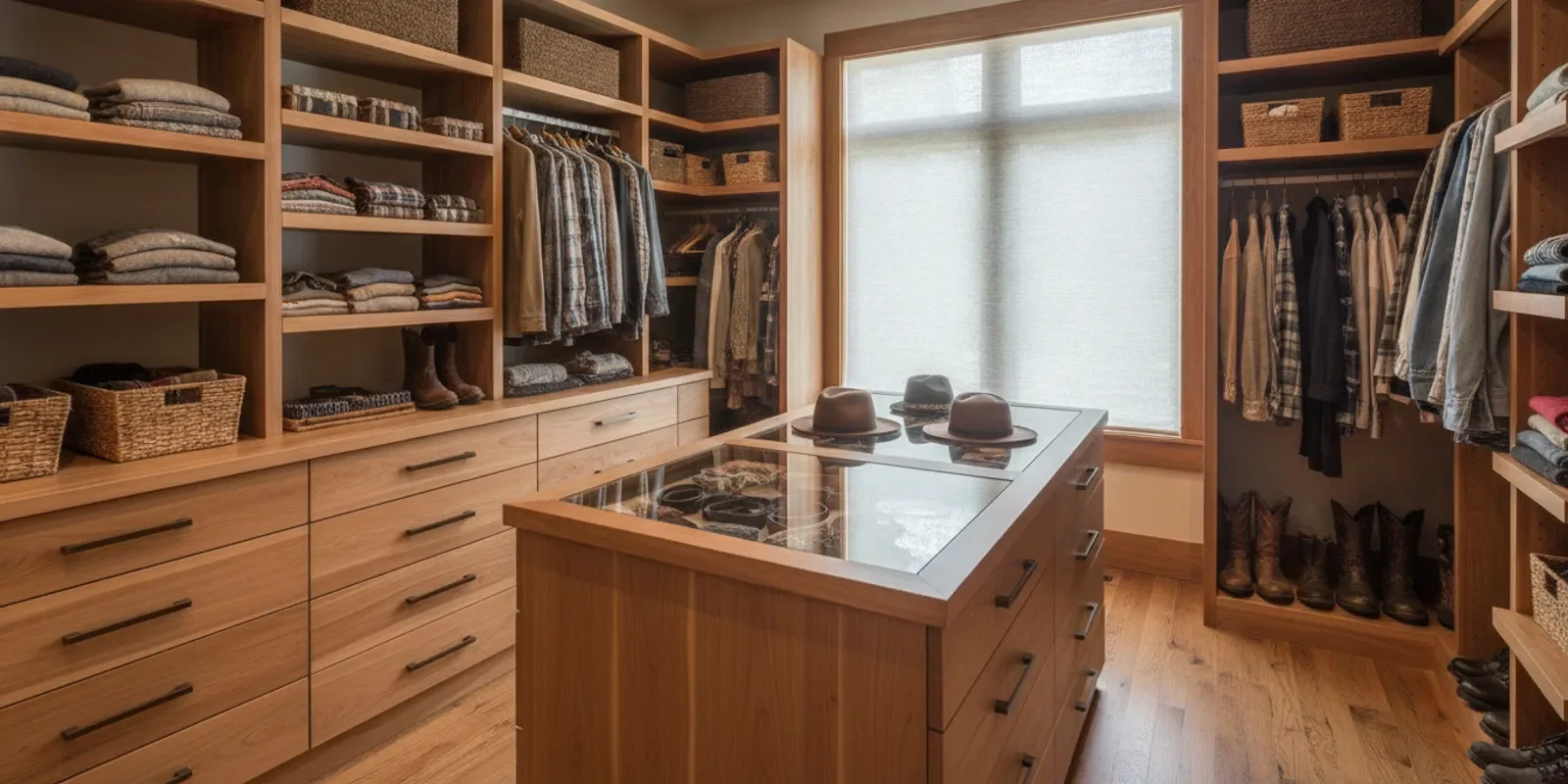
Custom closet accessories are storage components added to a closet layout to organize particular items or routines. Examples include adjustable shelves, drawers, shoe racks, specialty racks, and other accessories. A closet plan can combine these with hanging space and open storage, rather than relying on one kind of storage everywhere.
The useful question is not how many accessories a design can fit. It is which features solve a real problem in your daily routine. A drawer may help with small items that otherwise get lost. A shelf may keep folded sweaters visible. A shoe rack may use a narrow section more effectively than a row of boxes.
Closet systems can combine shelves, drawers, hanging rods, and accessories to organize a space, as described in this SEC filing on closet organization products. For a custom design, the next step is deciding which combination fits your belongings and the dimensions of your room.
Which accessories solve common closet problems?
Start with the items that cause the most friction. Do you have shoes crowded at the floor? Small accessories scattered across a shelf? Long garments competing with folded clothing for space? Match each problem to a feature before choosing finishes or adding extras.
Six useful closet accessories
Adjustable shelves. Folded clothing, bags, bins, and changing storage needs. Plan: Leave enough height for the items you use most.
Drawers. Small clothing, accessories, and items you want out of sight. Plan: Place daily-use drawers within easy reach.
Shoe storage. Keeping footwear visible and off a crowded floor. Plan: Account for different shoe heights and seasonal pairs.
Specialty racks. Specific accessories or gear that benefits from a dedicated spot. Plan: Choose a rack only after checking what it needs to hold.
Hanging space. Garments that need to hang, including longer pieces. Plan: Mix hanging lengths around your wardrobe.
Open shelves. Items you want to see or reach quickly. Plan: Avoid making open storage a catch-all for clutter.
These features are not interchangeable. A closed drawer hides visual clutter, while an open shelf makes its contents easy to see. A specialty rack can give one category a dedicated home, but it takes up space that might serve several other items. Compare the options with the closet systems buyer's guide and consider a blend rather than one uniform setup.
Use this comparison as a first-pass filter, not a shopping list. If shoes are the recurring problem, estimate the pairs that need to stay in the closet and decide whether visibility or compact placement matters more. If small items keep spreading across shelves, a drawer may solve the problem more directly than another open surface. This simple match between problem and feature helps keep the design focused.
Also check how each feature affects the space beside it. A drawer needs room to open and a person needs room to stand in front of it. A shelf that is easy to reach may be more useful than extra storage placed too high. The best choice is the one that works as part of the full layout, not just as an appealing component on its own.
How should you choose accessories for your routine?
Take a short inventory before planning. Group belongings by type, then note what you reach for every day, what you use occasionally, and what only appears in one season. This turns a vague wish list into practical priorities.
List the categories. Include clothing, shoes, bags, folded items, jewelry, and any other belongings you plan to store in the closet.
Notice the trouble spots. Identify what piles up, gets buried, falls over, or has no consistent place.
Separate daily and occasional use. Keep frequent-use items within comfortable reach. Less-used items can go higher or farther away.
Choose a storage method. Decide whether each group is easiest to hang, fold on a shelf, place in a drawer, or keep on a rack.
Check the space. Measure the room and look at doors, corners, existing fixtures, and the paths you need to move through.
Prioritize before adding extras. Make sure the core layout works before selecting optional features.
For example, someone who wears a small set of work clothes every week may value accessible hanging space and a drawer for everyday items. A household with many shoes may prefer a dedicated shoe zone close to the entrance of the closet. A person who changes seasonal clothing might benefit more from adaptable shelves than from a fixed arrangement sized for one season.
Make that example more concrete by tracking a typical week. Note which clothes and shoes you reach for on workdays, what you use for weekends, and which items remain untouched. If the same few pieces are repeatedly buried behind less-used belongings, the issue may be placement rather than a shortage of accessories. Move everyday categories to the easiest locations first, then decide whether additional components are needed.
These are starting points, not rules. A closet system comparison can help clarify the tradeoffs between modular and custom planning. If you are considering a walk-in, see the ideas in this walk-in closet design guide and keep your own inventory at the center of the plan.
When do drawers make sense, and when are shelves better?
Drawers work well for smaller items that are difficult to stack or keep tidy in an open area. They also create a cleaner visual surface when you prefer belongings to be out of sight. Think about what you will store and how often you need it. A deep drawer can hold bulkier items, while smaller compartments can separate accessories, if the design provides them.
Shelves make sense for folded clothing, bags, boxes, and items that benefit from being visible. They can be adjusted as storage needs change. Open shelves are less convenient if every item needs to be concealed, and a tall stack can become hard to reach or keep neat.
Many closets benefit from both. Keep frequently used small items in drawers, then use shelves for folded garments and bags. A dedicated hanging area can handle clothing that does not belong in either. The goal is to make each section easy to maintain, not to choose a side. For more detail, use this closet design overview as a planning companion.
One useful test is to picture putting items away at the end of a busy day. If a category needs to be folded carefully every time, an open shelf can turn into a pile. If an item is used often, a deep or difficult-to-open storage choice can make it inconvenient to retrieve. Think about both directions of the routine: taking the item out and returning it. Storage that is simple to put back is more likely to stay organized.
How can you plan shoe, bag, and accessory storage?
Small categories can take over a closet when they have no assigned home. Give them a zone based on how often you use them. Store everyday shoes and bags where you can reach them without moving other belongings. Put occasional or seasonal pieces in less prominent areas.
For shoes, count the pairs you intend to keep in the closet and think about their shapes. Boots need different clearance than low-profile shoes. A rack or shelf can keep pairs visible, but the chosen arrangement should fit the actual collection rather than an idealized one. Leave some room for the collection to change.
For bags, consider whether they stand upright, fold, or need to retain their shape. A shelf may work for larger bags, while a specialty rack can be useful for specific pieces. Small accessories are easier to manage when grouped by type, rather than spread across several shelves. A drawer, tray, or other designated space may help, depending on the design.
Do not assign every inch to the current inventory. A little open capacity makes it easier to put things away after travel, a change in season, or a new purchase. If the closet is compact, a small reach-in closet guide offers ideas for using limited space with intention.
A quick count can keep shoe and bag planning realistic. Separate pairs or bags you use weekly from those used for special occasions or particular seasons. Then consider whether frequently used pieces should sit at a convenient height while occasional ones can share higher or lower storage. This avoids giving prime locations to items that rarely leave the closet.
What should Southwest Colorado homeowners consider?
Closet storage in a mountain home may need to support changing seasons and varied routines. Clothing, footwear, and outdoor gear can shift through the year. A useful plan keeps current essentials easy to access while giving less-used items a defined place.
Think about what belongs in the closet and what belongs in an entryway, mudroom, or garage. Bulky equipment may be better stored near the point where it is used, rather than taking over bedroom storage. A closet can then focus on clothing, shoes, and personal accessories. For broader household planning, compare the closet layout with entryway and mudroom storage and garage storage options.
Seasonal rotation also affects accessory choices. Adjustable shelves allow a layout to adapt as folded items or bins change. Accessible hanging space can serve current clothing, while other areas hold items used less often. For another perspective on changing storage needs, see these custom closet designs for growing families.
Durability and ease of care matter in an active household. Consider how often a feature will be used and whether its placement makes everyday tidying simple. Choose accessories that suit the room and its contents, rather than adding a specialized component because it appears in a sample design.
For a home used across different seasons, decide whether rotation should happen inside the closet or elsewhere in the home. A closet that holds every seasonal item at once may leave daily clothing crowded. Some households may prefer a dedicated area for current essentials and another location for items not in season. If several family members share storage, label the zones in your plan by person or category so that the layout is easy to understand and maintain.
How do you avoid adding accessories you will not use?
A long list of upgrades can make a design feel complete on paper, but each component should earn its place. Ask what it stores, who will use it, and how often. If you cannot name a specific use, leave the space flexible until you have a stronger reason.
Do not plan from a photo alone. A feature that looks useful in another home may not match your belongings or room dimensions.
Avoid duplicating storage. If two features serve the same category, decide whether both are necessary.
Keep reach in mind. Storage is not practical if the items you use most are difficult to access.
Allow room for change. A rigid layout can become frustrating as clothing, household needs, or routines change.
Balance open and concealed storage. Open shelves improve visibility; drawers can reduce visible clutter. Neither is best for every item.
It can also help to look at the whole closet before selecting individual accessories. A thoughtful layout considers hanging lengths, shelf spacing, traffic flow, and the way doors open. The custom closet design and installation guide explains how design choices connect to the finished space. For examples of broader layouts, browse these custom closet design ideas.
Give yourself a way to rank options before discussing the design. Mark each idea as essential, helpful, or optional, and add a brief reason beside it. An essential feature solves a recurring problem, such as keeping everyday items accessible. A helpful feature improves convenience but is not necessary for the basic layout. Optional ideas can be reconsidered after the storage needs and room dimensions are clear.
What should you measure before choosing closet accessories?
Measurements help you distinguish a useful accessory from one that will crowd the closet. Record the overall width and height of the storage area, along with the depth available. Note sloped ceilings, trim, corners, and any fixed obstacles that could affect the layout. Include the space needed to open doors and move comfortably through the room.
Then measure or estimate the belongings that need a home. Check the height of boots and folded stacks, the width of bags, and the amount of hanging space used by longer garments. You do not need a perfect inventory of every item. A practical estimate is more useful than choosing components without considering what they must hold.
Mark the location of anything that should not be blocked, such as an existing fixture or an access point. Note which items you reach for daily and where you naturally stand when using the closet. This helps keep frequently used storage at a convenient height and avoids a layout that looks balanced but feels awkward in use.
Measurements are a starting point, not a substitute for professional planning. Bring your notes to a consultation and explain what is most frustrating about the current setup. A designer can help assess the room and review a proposed arrangement, including whether the planned shelves, drawers, racks, and hanging areas suit the available space.
To make your notes useful, record both a measurement and its context. For example, note a section's width alongside the category you hope to store there, rather than making a list of room dimensions alone. Include a quick sketch showing the door swing, corners, and fixed features. These details help frame questions about access and proportions without requiring you to design the system yourself.
What does the design process look like?
A clear plan begins with the room and the items it needs to hold. High Country Closets offers a free in-home consultation, 3D design rendering, and professional installation. During planning, share your inventory, routine, and priorities so the proposed layout can address real storage needs.
Bring a short list of must-haves and nice-to-haves. Note which items need quick access, which can be stored higher or farther away, and where your current setup falls short. A 3D rendering can help you review the planned arrangement before moving forward. Use that review to check that the selected accessories support your routine and that the overall layout feels balanced.
Explore the custom closet options available for walk-in, reach-in, and children's closets. The company serves Telluride, Durango, Cortez, Dolores, and surrounding Southwest Colorado communities. Learn more about its local, owner-operated approach or review additional custom storage services.
Before a design review, organize questions around real decisions. Ask how the plan accommodates your longest garments, where frequently used shoes will go, and whether adjustable areas can support changing storage needs. If you are uncertain about a specialty accessory, explain what you hope it will hold and ask how that space might be used if your needs change. A clear explanation makes it easier to compare the proposed layout with your priorities.
Book your free custom closet consultation
Frequently asked questions
What are the most useful custom closet accessories?
The most useful accessories are the ones that solve a recurring storage problem. Adjustable shelves, drawers, shoe storage, specialty racks, and suitable hanging space are common options. Choose based on your belongings and routine, not on the number of features in a sample design.
Are closet accessories only for walk-in closets?
No. A reach-in closet can also benefit from a planned combination of hanging space, shelves, drawers, or shoe storage. The available space and the items you need to store determine which features make sense.
Should I choose drawers or shelves?
Choose drawers for small items or belongings you prefer to keep out of sight. Choose shelves for folded clothes, bags, and items you want to see or reach quickly. A combination often supports more types of belongings than either option alone.
How do I know which accessories fit my closet?
Make an inventory, identify the items that cause clutter, and measure the closet before deciding. Consider access, door clearance, and how the space is used. A professional design consultation can help translate those needs into a layout.
Can closet accessories change as my storage needs change?
Some layouts include adjustable components, which can help accommodate changing storage needs. Ask how each component can be adjusted and plan some open capacity rather than filling every available area from the start.
Plan accessories around the way you live
The best closet accessories are practical additions to a layout built around your belongings. Start with everyday needs, compare drawers, shelves, racks, and hanging space, then leave room for change. A clear plan makes it easier to keep the closet organized long after installation.
