Entryway Storage for Vacation Homes in Colorado
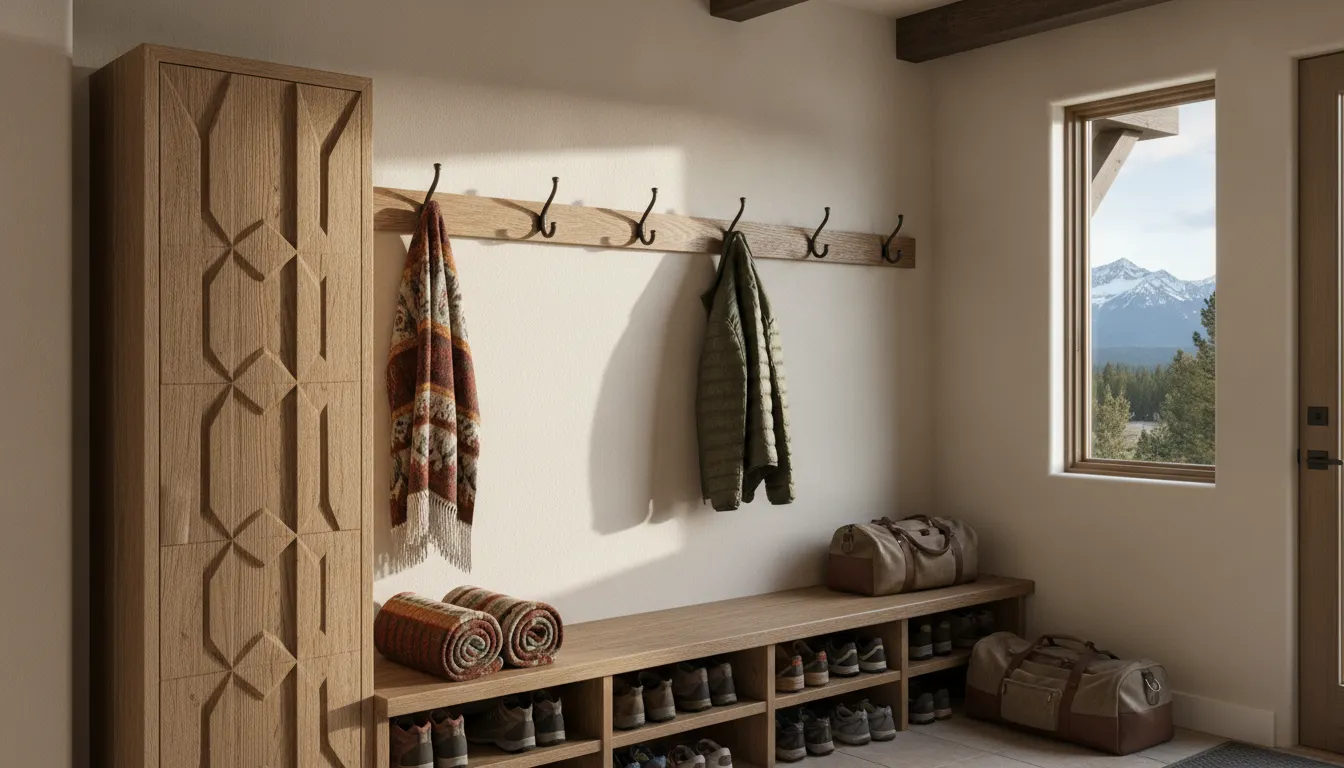
Guests form an impression of a vacation home before they reach the living room. They arrive carrying coats, boots, bags, groceries, and outdoor gear, then leave through the same space when it is time to go. The best entryway storage vacation home owners can add makes both transitions feel simple. It gives every item a clear place without making the entrance look like a gear closet.
Explore custom storage ideas for mountain gear and active homes.
What Is the Best Entryway Storage for a Vacation Home?
The best entryway storage for a vacation home combines an easy-to-read layout with durable, high-traffic materials. It should help guests answer four questions without asking a host: Where do coats go? Where can boots and shoes be placed? Where should bags sit? Which storage is available to guests, and which area belongs to the owner?
- A bench or comfortable perch for taking off boots and shoes.
- Open hooks at a height that works for adults and children.
- Shoe cubbies or shelves that keep footwear off the walking path.
- A designated place for luggage so bags do not block the door.
- Simple labels that clarify guest zones and owner zones.
- Materials and finishes that suit wet boots, snow, mud, and repeated turnover.
A custom entryway does not need to be large to work well. It needs to match the arrival sequence, the home's architecture, and the way guests actually use the space.
Design the Entryway Around the Guest Arrival Sequence
Start with the actions that happen in the first few minutes after arrival. A guest opens the door, sets down a bag, removes an outer layer, takes off shoes, and looks for a place to keep everything. A practical layout supports that sequence from left to right or from the door toward the interior of the home.
Keep the first landing spot open enough for a suitcase or duffel. A narrow shelf, console surface, or dedicated luggage zone can prevent bags from spreading into the hallway. Place hooks where coats and day packs can be reached easily. Put the bench and shoe storage close enough that guests do not have to cross the room in wet footwear.
The entryway should also support departure. Guests need to find shoes, coats, keys, and bags quickly when they are heading out for a trail, a ski day, or a drive into town. A predictable layout reduces the last-minute search that leaves belongings on the floor.
For a more general overview of Colorado entryway planning, see these mudroom ideas for Colorado mountain homes. This vacation-home guide narrows the focus to guest use, owner access, and changeover between stays.
Create Labeled Zones for Coats, Boots, Bags, and Gear
Labels are useful when people are unfamiliar with a home. They should explain the layout, not turn the entryway into an instruction board. Use a few clear categories such as coats, shoes, guest bags, and owner storage. Consistent labels also help a cleaner or property manager return items to the right location during turnover.
Coat and outerwear zone
Give everyday coats and jackets an open, visible home. Hooks are often easier for guests to use than a crowded closet because they do not require hangers or extra steps. Leave enough breathing room between hooks so bulky winter layers do not become one tangled pile.
Boot and shoe zone
Place shoe storage below or beside the bench. Open cubbies make it obvious where boots belong, while adjustable shelves can accommodate different footwear sizes. A tray or easy-to-clean surface below the storage can help contain tracked-in moisture and grit.
Bag and luggage zone
Guests may bring backpacks, tote bags, ski bags, or rolling luggage. A tall cubby, open shelf, or clear floor zone can hold those items without narrowing the main path. If the entryway is tight, use vertical storage rather than adding furniture that projects into the walkway.
Small-item zone
Keys, gloves, hats, and dog leashes disappear quickly in a busy vacation home. A shallow drawer, small cubby, or upper shelf gives those items a defined landing place. Keep this zone near the door, but do not place it where an open drawer or door interrupts traffic.
High Country Closets' custom entryway and mudroom solutions are designed around coats, shoes, bags, boots, and everyday gear. A consultation can help translate these zones into a layout that fits the actual wall length and door swing.
Choose Materials That Fit Mountain Weather and Frequent Use
Mountain vacation homes see more demanding entryway conditions than many primary residences. Snow, mud, wet boots, road grit, and rapid changes between indoor and outdoor temperatures can all affect a high-traffic drop zone. The goal is not to make unsupported performance promises. The goal is to choose finishes that are practical for the way the space is used.
Discuss moisture exposure, cleaning routines, and traffic patterns during the design process. Durable surfaces, sealed edges, and hardware selected for repeated use can make daily maintenance easier. A finish that wipes clean is often more useful than a delicate surface that looks good only when the entryway is empty.
Consider the visual character of the home as well. A mountain entryway can feel welcoming and finished without looking overly rustic. Neutral finishes, natural wood tones, and hardware that repeats details from the rest of the home can help the storage feel built in rather than added on.
For entries that connect directly to a garage, keep the transition clear. The garage storage planning approach can handle larger equipment and seasonal items, while the entryway remains focused on what guests need when they arrive and leave.
Make Bench and Shoe Storage Work Together
A bench is more than a place to sit. It creates a natural pause point where guests can remove wet boots, change into indoor shoes, or sort a bag before entering the home. The most useful bench is sized to the space and paired with storage that supports the action taking place above it.
Open cubbies under the bench keep frequently used shoes visible. Drawers can hold smaller accessories, but they should not be the only shoe solution because guests may not know what is inside. If the home receives groups, consider more than one seating position or a bench long enough for two people to use without crowding each other.
Keep the bench clear of decorative objects that make it difficult to sit down. A few durable cushions or a simple finish can add comfort without creating another item for turnover staff to move. The entryway should look welcoming when empty and remain usable when several guests arrive with gear.
For a deeper look at this specific feature, link the design discussion to entryway cabinet storage for mountain homes. The cabinet article covers additional ways to use vertical space while this guide focuses on the guest-ready flow of a vacation home.
Give Owners a Separate, Simple Access Zone
Vacation-home owners often need storage that is available to them without taking over guest areas. The cleanest approach is to define the boundary in the design instead of relying on a note left on a shelf. A tall cabinet, a clearly labeled upper section, or a separate closet area can keep owner supplies and personal items distinct from guest storage.
Owner storage should be easy to find during an arrival or departure visit. Group like items together, keep guest-facing areas open, and avoid placing personal belongings in the same cubbies guests are expected to use. The exact configuration depends on the home, the available wall space, and the owner's routine.
Do not assume that every vacation property needs the same type of access control. Discuss who needs access, what must stay available to guests, and how the space will be checked between stays. A design professional can then recommend a practical separation that fits the home rather than promising a feature the project does not include.
Schedule a free consultation to plan a guest-ready entryway around your home and storage needs.
Plan the Layout for Faster, Smoother Turnover
A turnover-friendly entryway is easy to inspect at a glance. When every category has a defined home, a cleaner or property manager can see what is missing, misplaced, or left behind. That clarity does not require a complicated system. It requires a layout that is consistent from one stay to the next.
- Keep guest storage at reachable heights and owner storage clearly separate.
- Use the same label language throughout the entryway.
- Leave a visible landing zone for forgotten items and incoming bags.
- Choose surfaces that can be wiped without moving every storage component.
- Keep floor-level storage open enough for a quick check after cleaning.
- Place frequently used items where guests will look first.
Think about the reset routine as part of the layout. A cleaner should be able to return shoes to cubbies, hang coats, and check the bench without opening every cabinet. This approach keeps the entryway calm for the next arrival and reduces the temptation to leave items in a temporary pile.
Turnover planning also helps with owner visits. When personal supplies are grouped separately, an owner can check that area without disturbing the guest setup. The result is a space that works for hospitality while still feeling like a private mountain home.
Keep Large Outdoor Gear in the Right Storage Area
The entryway should handle the first transition, not every item in the home. Skis, bikes, large coolers, tools, and bulky seasonal equipment usually need a larger storage area. Assigning those items to the garage or another purpose-built zone keeps the front door from becoming a permanent equipment depot.
The entryway can still offer a convenient handoff point. Hooks for a jacket, a shelf for gloves, and a bench for boots may be enough for daily use. Larger gear can move to the garage after guests arrive. This division keeps the guest-facing area welcoming while supporting an active mountain lifestyle.
High Country Closets also designs storage for changing seasonal needs. Link visitors to related Colorado mudroom planning ideas when they need a broader gear-management plan, then keep the vacation-home entryway focused on arrival, departure, and guest clarity.
How Should a Small Vacation Home Entryway Be Laid Out?
Small entries benefit from vertical planning and fewer, better-defined components. Start by measuring the usable wall, door swing, nearby stairs, and the path into the main living area. Then choose the smallest combination that supports the arrival sequence.
- Narrow wall: Use a shallow bench, wall hooks, and upper storage with a clear floor path.
- Short hallway: Combine a compact shoe cabinet with a small landing shelf and a single row of hooks.
- Open foyer: Define the entry with a bench, cubbies, and a tall storage section that creates visual order.
- Garage-adjacent door: Keep everyday guest items near the door and direct larger gear to the garage.
Do not fill every available inch simply because it is available. A vacation home entryway needs circulation space for people carrying luggage. A slightly more open plan is often more useful than additional storage that forces guests to step around furniture.
For narrow or unusual spaces, custom design can account for corners, sloped ceilings, and existing trim. High Country Closets serves Telluride, Durango, Cortez, Dolores, and surrounding Southwest Colorado communities with consultation, 3D design, and professional installation.
Frequently Asked Questions
What should every vacation-home entryway include?
Most vacation-home entryways benefit from hooks, a bench or perch, shoe storage, a luggage landing zone, and a small-item area. The exact mix depends on the home's size and the type of guests it welcomes. Mountain homes may also need a clear place for boots, coats, and outdoor layers.
How can an entryway stay welcoming when guests bring bulky gear?
Separate daily arrival items from larger equipment. Keep coats, shoes, bags, and boots near the door, then use the garage or another larger storage area for skis, bikes, tools, and seasonal equipment. Vertical storage helps preserve the walking path in a compact entry.
Should owner storage be in the entryway?
It can be, if the owner area is clearly separate from guest storage and easy to access during a visit. A dedicated section keeps personal items from occupying guest cubbies. The best configuration depends on the space, the owner's routine, and what guests need to use.
Can custom entryway storage work in a small mountain home?
Yes. A design can use vertical wall space, a shallow bench, slim cabinets, or storage fitted around an awkward corner. The layout should protect the path through the entry while giving the most-used items a predictable home.
How do I plan entryway storage for a vacation home in Telluride or Durango?
Start with the arrival sequence, the number of guests, the gear they bring, and the owner's storage needs. Then review measurements, door swings, traffic flow, materials, and labels with a storage designer. Contact High Country Closets to discuss a tailored entryway plan for your Southwest Colorado home.
A guest-ready entryway does not need to look commercial or overbuilt. It needs to make the first step inside feel easy, contain the mountain-weather mess, and give owners a clear way to manage the space between stays. With thoughtful zones and a layout built around real movement, the entryway can become one of the most useful rooms in a vacation home.
Learn more about a custom entryway design for your Colorado mountain home.