Mudroom Ideas Colorado: Custom Entryways for Mountain Homes
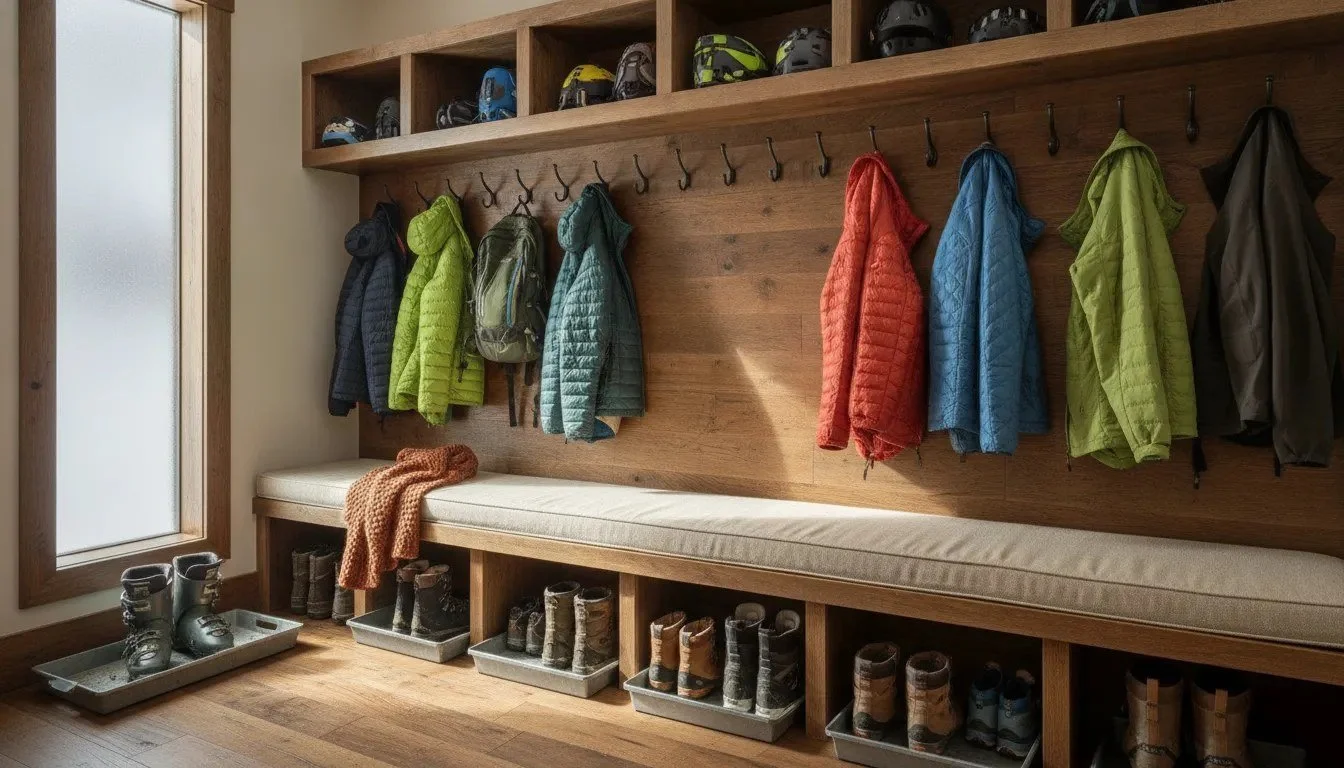
In a Colorado mountain home, the entryway works hard before the day even begins. Snowmelt, muddy boots, bulky coats, and ski or hiking gear can quickly turn a narrow doorway into a daily bottleneck. The right layout creates a clear drop zone, keeps wet gear from spreading into living areas, and makes it easier for everyone to leave ready for the weather.
The most practical mudroom ideas colorado homeowners can use combine a durable floor, a built-in bench, open cubbies, and dedicated lockers or hooks for each person and activity. Add a boot tray or drainage area, and plan for airflow so melting snow can dry without lingering moisture.
Those details matter because a mountain mudroom is not simply an attractive entry. It is a working transition between unpredictable outdoor conditions and the comfort of the home. The best design starts by accounting for how snow, mud, seasonal temperature changes, and gear actually move through the space.
The entryway and the garage often solve the same puzzle: containing outdoor gear so it stays out of living areas. A coordinated storage plan treats the front door, the mudroom, and the garage as one connected system. When snow boots, skis, bikes, and stored bins each have a clear destination. The home runs more smoothly from the first arrival of winter through the peak of mud season.
Why a Colorado Mudroom Needs a Custom Approach
A mountain mudroom has to do more than provide a place to drop a jacket. In Southwest Colorado, deep snow, muddy shoulder seasons, and rapid temperature swings can push a standard entryway beyond its limits. A narrow bench, a few wall hooks, and a decorative rug may look finished on move-in day. But they rarely manage wet boots, bulky layers, and the steady movement between outdoors and indoors.
The first challenge begins before anyone crosses the threshold. Entry protection affects how much snow and moisture reaches the mudroom in the first place. Deep overhangs and a covered front porch can help keep an entryway snow-free during winter, according to the U.S. Department of Energy's Building America Solution Center. That architectural protection works best when the interior storage plan continues the same logic. A covered landing, durable flooring, and a defined place for wet gear create a more reliable transition from the driveway or trail to the rest of the home.
Inside, think in terms of a dirty zone and a clean zone. Fine Homebuilding describes the boundary between an entryway and the living space as one of the most effective ways to contain mud and snow. That boundary does not have to feel harsh or utilitarian. It can be created with a change in flooring, a built-in bench, a low cabinet, or a wall of lockers that gives outdoor gear a clear stopping point. The goal is to keep grit, slush, and dripping clothing from spreading into kitchens, living rooms, and hallways.
This is where a custom approach earns its place. A mudroom designed around the household can account for the actual number of users, the width of the entry, and the gear that needs to be stored there. One family may need tall compartments for ski bags and helmets, while a vacation home may need flexible storage that works for different groups of guests. A compact townhome may benefit from vertical lockers and shallow cabinetry instead of a deep bench that narrows the passage.
Material selection matters just as much as the layout. Colorado mudrooms experience wet boots, tracked-in grit, freeze-and-thaw conditions, and sharp changes between outdoor and indoor temperatures. Colorado State University Extension notes that mudroom designs in areas with significant seasonal weather shifts should prioritize durable materials that can withstand rapid temperature changes. Choose surfaces that are easy to wipe down, hardware that can handle frequent use, and finishes that will not make ordinary winter wear feel like a maintenance emergency.
For more inspiration, explore these mountain mudroom designs with the climate, traffic, and storage demands of your home in mind. The best plan is not the one with the most features. It is the one that makes the messy parts of mountain living easier to manage every day.
Mudroom Ideas Colorado Homeowners Rely On
The most useful mudroom ideas Colorado homeowners choose begin with a simple goal: create a practical transition between outdoor weather and the home's finished spaces. A well-planned mudroom catches dirt, moisture, and debris before they travel into the kitchen, living room, or stairs. Perlick describes the mudroom as a transitional zone that protects the rest of the home from those everyday contaminants.
That purpose matters even more in a mountain home, where the entry may handle snow boots, wet jackets, dog gear, and recreation equipment in the same afternoon. Instead of treating the mudroom as leftover wall space, plan it around the way your household actually arrives, unloads, and leaves again.
Give Every Person a Defined Landing Spot
Cubbies and personalized lockers make a shared entry easier to use because each person has an obvious place for coats, footwear, helmets, bags, and seasonal equipment. Dedicated cubbies and lockers are commonly recommended for organizing outdoor gear in a compact mudroom. The most effective arrangement is not necessarily the one with the most compartments. It is the one that puts frequently used items within reach and keeps each category visible.
For a family, that may mean one locker per person, with a shelf above for hats and gloves and a lower compartment for boots or a sports bag. In a smaller Durango or Telluride entry, a narrower vertical locker can use height without consuming the entire walkway. A bench below the lockers adds a place to sit while removing snow boots, while the space beneath can hold shoes or bins. Built-in bench storage is especially helpful when floor area is limited.
Think about seasonal changes when assigning storage. Winter coats need more depth than lightweight jackets, and ski or hiking gear may need a separate home from daily school and work items. Open cubbies make it easy to see what is available, while doors can conceal visual clutter in a second home or a frequently photographed entry. A custom layout can combine both approaches rather than forcing every item into identical compartments.
Choose Hooks for Speed, Hangers for Special Items
Hooks usually outperform hangers for the daily rush. Bulky winter coats are faster to drop onto a sturdy hook, and children can use them without carefully fitting a garment onto a hanger. Hooks provide a quicker storage option for heavy coats, particularly in busy family entries. Place them at more than one height so children can manage their own gear and adults have room for longer jackets.
Hangers still have a role. Reserve a short run of them for delicate layers, dress coats, or clothing that needs to remain wrinkle-free. The combination keeps everyday storage simple without sacrificing a more polished option for guests or formal wear.
Finally, let the mudroom's storage logic continue into adjacent areas. A coordinated plan can keep overflow equipment from collecting by the back door, especially when paired with custom garage storage for larger recreation items. The result is a transition zone that feels intentional, not crowded, and works with Colorado routines in every season.
Bench, Cubby, and Locker: The Gear Workhorse
A well-planned bench is more than a place to sit while pulling on snow boots. It establishes the working center of the mudroom. Giving each person a comfortable landing spot and a defined place for the gear that tends to collect by the door. A built-in bench can also create useful storage underneath for shoes and other everyday items, a practical combination noted by mudroom design specialists.
For adult footwear, plan on roughly 18 inches of bench depth. That dimension gives larger boots room to sit beneath the seat instead of protruding into the walkway. According to a Colorado mudroom design guide from Out of Sight Closets. The exact measurement should still be checked against your household's footwear, wall depth, and circulation path, especially in a narrow townhome entry.
Give every category of gear a home
Under-bench drawers, lift-up compartments, or open bays can handle shoes, helmets, gloves, and smaller equipment. Open storage is convenient for items used daily. While drawers or doors keep visual clutter under control in a second home or a main entry visible from the living area. Use the storage depth for the objects that actually need to live there, rather than designing a large cavity that becomes a catchall.
Above the bench, dedicated cubbies and personal lockers make it easier to separate coats, boots, and sports gear by person or activity. Gem Homes Indy specifically recommends cubbies and personalized lockers for seasonal outdoor equipment. In a Colorado household, that can mean one locker for each family member, or separate zones for ski layers, hiking equipment, and school bags. Individual ownership also makes the daily reset simple: wet or muddy gear has a clear destination instead of spreading across the room.
Use hooks at adult and kid heights
Hooks are usually faster than hangers when winter coats are bulky and everyone is coming inside at once. A two-row layout gives children a reachable place to hang their own jackets while keeping adult outerwear higher and out of the traffic path. One Colorado mudroom guide recommends placing the adult row near 60 inches and the children's row near 40 inches. Treat those figures as starting points, then adjust for the people who will use the room and the height of the lockers below.
Keep the most frequently used hooks close to the bench, and reserve higher or more enclosed storage for overflow coats and seasonal items. This arrangement turns the bench, cubbies, lockers, and hooks into one continuous gear station rather than a collection of separate features. For more ideas that connect this approach to mountain-town equipment, explore these ski gear storage solutions.
The best system is sized around real routines. Measure boots, helmets, coats, and bags before finalizing the cabinet layout. Then leave enough clear floor space to sit, turn, and move through the entry without brushing against stored gear.
Plan for Snow, Mud, and Mud Season
In a Colorado mountain home, the mudroom has to manage more than everyday shoes. Snow melts from boots, wet gloves collect by the door, and spring mud can move quickly from the entry into finished living areas. A practical layout creates a clear transition between the dirty zone and the clean zone. Giving wet gear a designated place to land before it becomes a flooring or storage problem.
Choose flooring that can take the weather
Flooring is the first line of defense. Arciform recommends resilient, easy-to-clean materials such as tile, stone, or luxury vinyl for high-traffic entryways exposed to significant precipitation. See its mudroom flooring guidance for the source recommendation.
Each option brings a different balance of durability, maintenance, and appearance:
Tile: Best for frequent snow and mud. Durable and simple to clean; choose a slip-conscious surface where melting snow is common.
Stone: Best for mountain-style interiors. Offers a natural visual transition from the exterior entry; pick the finish for wet traction and routine cleaning.
Luxury vinyl: Best for a softer feel or wood-look finish. A resilient alternative that keeps natural wood out of the wettest part of the entry.
Colorado mudrooms also experience rapid seasonal temperature changes. Colorado State University Extension notes that designs in areas with significant weather shifts should prioritize materials that can withstand those changes. That makes material selection part of the storage plan, not a finishing detail. Read the Colorado State University Extension resource for related guidance on Colorado home conditions.
Give melting snow somewhere to go
A boot tray is a small feature with a major effect on daily cleanup. Place it directly beneath or beside the boot-storage zone, where it can capture melting snow before it spreads across the room. In a larger renovation, a specialized drainage area can provide a more permanent solution. Arciform specifically recommends boot trays or floor drainage areas to capture slush and protect the rest of the flooring.
Keep the tray easy to remove and clean, and leave enough clearance for the largest household boots. A shallow decorative tray may look tidy but fail when a family comes in carrying ski boots, snowshoes, or muddy shoes. The best mudroom ideas Colorado homeowners use are built around the actual gear entering the home, not just the appearance of an empty room.
Dry clothing before moisture becomes a problem
Wet gear needs air movement. Colorado State University Extension explains that effective ventilation helps dry wet clothing and prevents moisture buildup that can lead to mold. Include open sections near the entry for damp coats, gloves, and hats rather than sealing everything inside a closed cabinet immediately after use. Slatted shelves, breathable baskets, and space between hanging items can support airflow while keeping the room organized.
For a high-use family mudroom, separate the wettest items from clean coats and stored accessories. That simple division reduces lingering dampness and makes the room easier to reset after a storm. Durable flooring, controlled drainage, and ventilation work together: one contains the mess, one captures the water, and one helps the remaining moisture leave the space.
Mudroom Ideas for Townhomes and Second Homes
Townhomes and second homes often need the same mudroom performance as a larger primary residence, but with less room and less daily oversight. The goal is to make every inch work as a transitional zone, catching dirt, moisture, and debris before they move into the living area. That boundary between the dirty entry zone and the clean interior is especially valuable when a narrow hall. Shared stairway, or open-concept floor plan leaves little room for separation. Vacation home storage works best when it is designed around how the home is actually used, not simply how much cabinetry can fit along one wall.
Make a narrow entryway do more
In a townhome, a full mudroom may be unrealistic. A compact wall can still combine a seat, hooks, upper storage, and a defined place for shoes. A shallow cabinet or locker run keeps coats and helmets off the stairs, while a built-in bench creates a practical stopping point for removing boots. Under-bench drawers or open compartments can hold footwear without consuming another section of floor space.
Use vertical space deliberately. Hooks are often more useful than hangers for bulky winter coats because they make daily drop-off faster and easier. Place them at different heights if children or guests use the entry. Keep frequently used items within reach, and reserve the highest cabinets for backup gloves, extra blankets, or equipment that only comes out during part of the year. This approach makes the entry feel calmer without requiring a large footprint.
Design around seasonal turnover
Second homes have a different organizational challenge: the gear changes, and the people using the home may change with it. Ski boots, helmets, and heavy layers may dominate in winter. In summer, those same compartments might need to hold hiking shoes, rain shells, bike accessories, or lake and picnic gear. Adjustable shelves, movable hooks, and labeled zones allow the storage to change without a remodel.
Moisture deserves extra attention when a home sits empty between visits. A boot tray or drainage area can capture slush as snow melts, while airflow around wet coats and footwear helps the space dry. Colorado State University Extension notes that ventilation helps dry wet clothing and limits moisture buildup that can contribute to mold: Colorado home heating and ventilation guidance. Durable, easy-to-clean surfaces also make sense in an entry exposed to repeated seasonal temperature changes.
For an existing townhome or vacation property, a focused design process can keep disruption manageable. Depending on the scope and site conditions, custom storage may have a quick two-to-four-week turnaround. The result is a compact entry that supports arrivals, departures, and seasonal gear changes without turning the front door into a pile-up zone.
Call 970-818-3321 today for a free design consultation and 3D rendering of your mudroom.
Frequently Asked Questions
What should every Colorado mudroom include?
Start with a clear drop zone that separates wet, dirty gear from the living area. A built-in bench makes it easier to put on or remove snow boots, while storage beneath the seat keeps footwear contained. Add individual cubbies or lockers for coats, boots, helmets, and sports equipment, plus durable hooks for bulky winter layers. A boot tray or drainage area helps capture melting snow before it reaches adjacent flooring. These features support the mudroom's role as a transition between the outdoors and the home, where dirt and moisture can be contained before spreading indoors. Source: Perlick.
How do I keep snow and mud from damaging a mudroom?
Use a resilient, easy-to-clean floor such as tile, stone, or luxury vinyl, and place a boot tray near the entry. Keep a defined dirty zone around the door, then transition to cleaner storage and seating farther inside. Materials should also tolerate rapid seasonal temperature changes, which are an important consideration in Colorado mudroom design. Source: Colorado State University Extension.
Are lockers or cubbies better for outdoor gear?
Both can work, but the best choice depends on the gear and the available wall space. Open cubbies make frequently used items easy to reach, while taller lockers are better for separating each person's coats, boots, helmets, and equipment. Hooks are often faster than hangers for heavy winter coats, especially in a busy family entry. Combining the two creates a flexible system for daily gear and seasonal storage.
How can a mudroom help wet boots and clothing dry?
Give wet items a designated place instead of stacking them on the floor or against finished cabinetry. Use a boot tray or drainage area, leave room around hanging coats and equipment, and plan for effective ventilation. Proper airflow helps wet clothing dry faster and reduces moisture buildup that can contribute to mold. Source: Colorado State University Extension.
Ready to Plan a Mudroom That Works for Your Home?
A thoughtful mudroom layout can make daily arrivals easier by giving snow gear, boots, and outdoor equipment a clear place to land. Book a free custom design consultation and 3D rendering to talk through your space, storage priorities, and the way your household uses the entry. Our team can help you shape a practical combination of benches, cubbies, and lockers for your Colorado home.