Garage Shelving for Mountain Homes: Custom That Holds Up
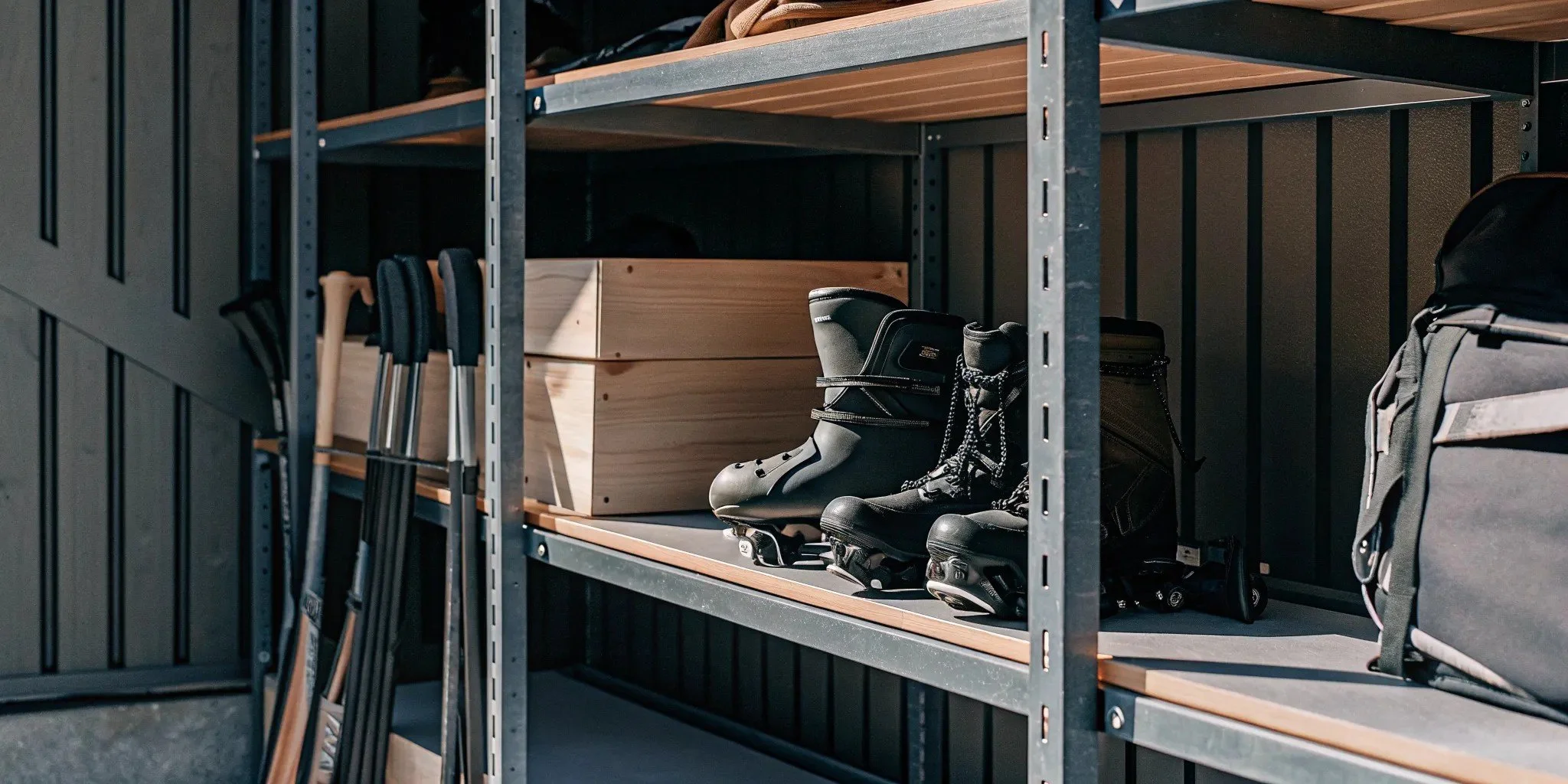
Heavy ski gear piled on a damp garage floor will ruin your equipment and create tripping hazards. Standard retail racks often buckle under the weight of Southwest Colorado winters.
Schedule a free in-home consultation and 3D rendering
Custom garage shelving is the best way for mountain homes to handle heavy sports gear and fit tight, sloped spaces. Unlike weak retail units, custom systems are built from solid steel that will not bend or sag under heavy winter loads. Storing your seasonal items on strong wall racks protects your costly ski gear and keeps it dry. According to rules from the CDC and NIOSH, neat elevated storage of gear is vital to stop tripping hazards. Keeping your garage clean and clear also protects your home against fire and pest hazards that thrive in messy spaces. Choosing custom systems over flimsy store-bought racks ensures your setup is safe and secure for years of rugged mountain use.
But why do standard retail storage units fail so quickly in our local mountain conditions? Learning Why Mountain-Home Garages Are Hard on Garage Shelving is the first step to finding a heavy-duty system that lasts for years. The explanation begins with
Why Mountain-Home Garages Are Hard on Garage Shelving
Mountain living in places like Telluride and Durango brings major storage problems. Owners must store heavy winter sports gear, tools, and large yearly items. Also, many second homes face high turnover. This constant loading and unloading puts a heavy strain on your storage setup. Standard retail options often buckle under the weight of skis, snowboards, boots, and heavy gear. To protect your home and gear, you need a system that can stand up to these tough local demands.
Heavy winter gear and seasonal storage
A mountain garage is more than a place to park a car. It acts as a staging area for outdoor gear. Homeowners need to store skis, snowboards, snowshoes, and heavy tools. Standard retail shelving often bends or breaks under this heavy load. A custom setup is built to handle these heavy items. Using elevated shelving allows owners to store yearly items safely, which keeps the floor space clear for daily parking and other tasks. This is especially helpful in smaller mountain layouts where space is tight.
Heavy winter gear is not the only thing that piles up. Owners in Durango and Telluride store a wide range of bulky tools and gear, including:
Heavy skis and snowboard bindings that put uneven weight on shelves.
Snowshoes and ski poles that need special hooks and mounts.
Winter boots and hiking gear that need wide, deep shelves to dry.
Heavy yard tools and snow blowers that can easily scratch thin shelving.
Safety hazards and lifting ergonomics
Cluttered garages are not just messy; they are also unsafe. Enclosed garages can collect piles of loose items that block paths. These piles can cause falls or attract pests. According to safety rules, storage areas must stay free from piles of gear that create tripping, fire, or pest hazards. Lifting heavy gear from the ground also increases the risk of back injury. Storing materials on orderly, elevated shelves makes lifting much easier and safer. Setting up your garage shelving within an ergonomic range between knee and shoulder height helps you lift heavy loads without straining your back.
Cold and wet mountain weather
Southwest Colorado has extreme cold and damp air. Snowy boots and wet gear bring moisture into your garage. This dampness can ruin weak materials like particle board or thin metal. Weak shelves will sag, warp, or rust over time. High-quality shelving for mountain homes must be built to resist cold and wet weather. Expert designs use powder-coated metal and thick wood to stay strong. While you might think about a quick store-bought option, retail units do not have the strength or weather protection needed for mountain weather. Expert planning and setup are the best ways to get a system that lasts.
Garage Shelving vs. Retail Racks: What Off-the-Shelf Gets Wrong
Many mountain homeowners buy cheap plastic or light wire racks at local big-box stores. They hope these quick fixes will solve their storage problems. But stock systems often fail under the weight of real mountain gear. To keep your home safe and organized, you need a system that can stand up to heavy loads.
Weight limits and load failure
Standard retail wall-mounted shelves only hold about 100 pounds per linear foot. While this limit may seem enough for small boxes, it is far too low for heavy ski gear and bulk tools. Some heavy-duty wall-mounted kits can support 650 pounds per four-foot section. But if you do not mount them into studs, they can rip out of the drywall and drop your gear.
Under federal safety guidelines like OSHA standards for materials handling, storage systems must be stable and secure against collapse. Cheap retail racks often fail to meet this basic standard because they use weak plastic joints. When you stack heavy bins, the legs can bow or slide on cold concrete floors. A professional design secures every rack directly to the wall and floor studs of your garage.
Rust and environmental damage
Mountain weather is harsh on raw metal and plastic, as cold winters and wet snow bring high humidity into your garage. Basic retail wire racks rust quickly when wet skis and snowy boots drip on them. High-quality metal shelves are powder-coated to protect the steel from rust and weather damage. Without this thick protective coat, your cheap racks will peel, flake, and weaken within a few seasons.
The true cost of retail racks
Buying cheap storage might seem like a good way to save money. But buying new shelves every few years costs more in the long run. Our custom garage shelving offers much better long-term value because it uses strong, heavy steel. Professional systems are designed to fit your exact space and survive the heavy use that mountain life demands.
The table below shows how off-the-shelf retail racks compare to custom storage systems.
Weight Capacity: Retail Racks have low limits, about 100 lb per linear foot, while Custom Shelving handles up to 650 lb per four-foot unit.
Stability & Anchoring: Retail Racks are freestanding or use basic drywall anchors, while Custom Shelving is secured directly to wall and floor studs.
Fit to Space: Retail Racks come in fixed sizes that leave wasted space, while Custom Shelving is tailored to sloped ceilings and tight spots.
Durability & Corrosion: Retail Racks use bare metal that rusts and plastic that cracks in cold, while Custom Shelving uses powder-coated steel that resists rust and cold.
Customization: Retail Racks offer none, standard wire shelves only, while Custom Shelving includes ski racks and custom bike mounts.
Long-Term Value: Retail Racks have a low initial cost but need regular replacement, while Custom Shelving has a higher upfront cost with years of reliable use.
Designing Garage Shelving for Ski Gear, Tools, and Seasonal Storage
Storing heavy sports gear, workshop tools, and old boxes in a mountain home needs a smart layout. Standard shelves quickly fail under the weight of winter boots and bins. Expert planning helps find your exact storage needs, from bulky winter gear to small hand tools. This plan lets you design strong custom garage shelving that fits your life and keeps your floor clear.
Zones for winter gear and ski tuning
Winter sports gear is bulky and wet. Storing wet skis, snowboards, and boots on cheap wood shelves can lead to rot and rust. A custom layout lets you add special parts like heavy ski racks, wall hooks, and custom bins. Wire shelving is a great choice here because it allows air to flow freely. This helps dry your wet gear fast and prevents mold.
For safety, you should store your heavy gear in a safe zone. The CDC notes that orderly elevated storage keeps floors clear of tripping hazards. It also places heavy gear in a range between knee and shoulder height for easier lifting. Keeping heavy ski boots at this level makes lifting and carrying much safer for your back.
Heavy tools and workshop supplies
Hand tools, power tools, and hardware need stable homes. A cluttered workbench can quickly become a safety risk in a busy garage. To keep your work space safe, you must avoid pile-ups on the floor. Safety standards require that aisles and passageways must stay clear of blocks that could cause trips.
A smart layout maps out set spots for each tool type. Heavy tool chests can sit on low, strong shelves. Often, hand tools go on wall pegboards for quick use. This plan keeps your walk areas clear and makes sure every hand tool and wrench is in its place. It also helps you find what you need without searching through a mess.
Seasonal bins and summer storage
Mountain living means changing your gear with the seasons. In spring, ski gear moves to high shelves to make room for summer bikes, hiking packs, and camping gear. In fall, the steps turn back. High shelves let you store seasonal bins out of the way. This leaves the prime eye-level shelves open for items you use every day. Modular shelf tiers make these swaps simple.
Instead of guessing how to fit your gear, consider a professional design consultation. A custom storage expert can look at your space and make a 3D plan. This plan shows how to fit your skis, tools, and bikes well. Working with an expert ensures you get the right layout for your mountain lifestyle. It saves time and prevents storage mistakes.
Get a free in-home consultation and 3D rendering for your custom garage shelving
What Weight Capacity Should Your Garage Shelving Have?
Many homeowners do not think about how much their items weigh until a shelf begins to bend. In a mountain home, your garage must hold a lot of heavy gear. Knowing the right weight limit for your storage is key to keeping your space safe and clean. Standard shelves from a local shop might look fine, but they often fail under real loads.
Standard weight limits for garage storage
When you buy standard wall shelves, they are usually made for light boxes. According to a Lowe's guide on garage storage, basic wall shelves hold about 100 pounds per linear foot. This limit is fine for light holiday boxes, but it is not enough for heavy tools. If you pack several heavy bins onto these shelves, they will quickly bend.
If you want to hold heavier items, you might look at wall kits. Some heavy-duty wall systems can hold up to 650 pounds for each four-foot section, as shown by Rhino Shelf storage ratings. These kits are much stronger than standard shelves, but they still have limits. You must also make sure they are hung on strong wall studs, or they can pull out from the drywall.
Why mountain gear requires heavy-duty limits
Homeowners in places like Telluride and Durango face unique storage needs. Winter sports gear like skis, snowboards, boots, and poles is not just bulky; it is also heavy. When you add heavy toolboxes, snow chains, and camp gear, the weight adds up fast. A single shelf may need to hold hundreds of pounds of gear for months at a time.
Standard plastic or thin metal racks from a big box store can buckle under this pressure. They are not built for the cold winters and wet gear of Southwest Colorado. To keep your items off the wet floor and safe from rust, you need shelves that can stand up to heavy loads. Choosing a professional custom garage shelving system ensures you have the strength you need.
The safety risks of overloaded systems
Overloading your shelves is more than just a threat to your gear. It is also a major safety hazard for your home. If a shelf falls, it can damage your car or cause harm to anyone nearby. It can also create a messy pile that makes it hard to walk through your space.
Federal guidelines warn that piled items must be stable and secure to prevent sliding or collapse. To keep your home safe, storage areas must stay free from hazardous clutter. This is a key part of the federal OSHA stability standards for storing materials. A weak shelf that sags or leans does not meet these basic safety needs.
By building a custom system, you can distribute weight precisely across different areas. This lets you store both heavy winter gear and lighter summer items safely without going over the load limit of the shelf. A tailored design puts your heavy items on reinforced sections and keeps your daily paths clear.
Wall-Mounted vs. Freestanding Garage Shelving: Which Holds Up Better?
The Safety and Stability of Wall-Mounted Storage
When you plan your garage layout, safety must come first. Mountain homes in Colorado face cold air and damp soil, which can make racks sway. Wall-mounted garage shelving mounts straight to the wall studs to create a strong frame. Safety rules from OSHA 1910.176 state that shelves must be secured to wall or floor studs. This keeps them steady when you stack heavy gear.
Stud-mounted racks are great for heavy winter sports gear because they keep the floor clear. You can place large bins below them to get more space. Wire shelves are a good pick for this type of set up. Open wire grids provide great visibility and airflow, which makes it easy to inspect your gear and find what you need.
The Limits and Tipping Risks of Freestanding Racks
Freestanding racks seem simple because you can place them anywhere in the room. They can work well for lightweight plastic bins in dry corners. But they carry a high risk of tipping if the floor is not flat or if you stack heavy loads. Sudden bumps from your car can send the whole rack crashing down, and small earth shakes in mountain areas can also rattle loose shelves.
These rack systems often hold less weight than wall systems. Most retail plastic or thin metal racks bend under heavy loads. If you stack heavy tools, tires, or winter gear on them, the shelves will sag. This creates a safety hazard in your home, so it is much safer to use a system that anchors to your walls.
Why Professional Stud-Mounted Systems Outlast Retail Options
Retail DIY shelving kits often use cheap metal or plastic. These parts rust, warp, or crack when the weather gets cold, so they do not last long. Professional custom garage shelving is made from strong, thick steel. It is built to hold up under the weight of heavy mountain gear year after year. A pro team will find the wall studs and mount the system with heavy-duty screws.
Local homes have unique walls and tight spaces that standard racks cannot fit. When you work with local builders, you get a system designed for your exact space. An expert team will help you choose the best layout for your needs, which gives you a durable setup that keeps your floor clear. This also keeps your family safe while keeping seasonal gear within easy reach. You can start with a free 3D design of your space.
How Custom Garage Shelving Handles Sloped Ceilings and Tight Footprints
Colorado mountain home architecture
Colorado mountain homes often have unique shapes. Sloped ceilings, A-frames, and vaulted roofs are common in Telluride and Durango. Standard retail shelves do not fit these angled walls. They leave large gaps of wasted space. A flat metal rack cannot go into a sharp corner. You end up with empty spaces that you cannot use for storage. Custom design makes the most of your space in sloped-ceiling areas and odd layouts.
When you apply basic storage design principles to a garage, you must think about the roofline. Retail racks are stiff. They cannot bend to match a sloped ceiling. A custom system fits the exact slope of your wall. This gives you deep shelves where the ceiling is high and shallow shelves where it dips low.
Overcoming tight footprints and obstructions
Mountain home garages often have tight footprints. You must store bulky items like skis, snowboards, and heavy winter tools. At the same time, you must work around local home features. Many mountain cabins have exposed beams, heat vents, or stone pillars. These features make it hard to place standard retail racks. Many of these houses are second homes. You want to park your car inside during a heavy snowstorm. But when gear spills onto the floor, you lose your parking spot.
Unlike retail units, custom garage shelving fits around these obstacles. A local builder can design a system that bridges over a low pipe or wraps around a wood beam. This level of planning is also common in custom closets where every inch counts. In a tight garage, custom shelving lets you use wall space that would sit empty. You can have shelves that go all the way to the floor or hang high on the wall. This lets you store plastic bins below and hang bikes above.
Safety, durability, and long-term value
Safety is key when you store heavy gear in a tight space. To prevent sliding or collapse, you should secure storage units to wall studs. Custom shelving stays stable even under heavy winter loads. It keeps your floors clear. This helps you prevent the buildup of items that create fire or tripping hazards.
Custom setups also offer better long-term value than retail units. Cheap plastic or thin metal racks wear out fast. They bend under the weight of ski gear or tools. You must replace them every few years. Professional garage shelving is built to last. It is a smart choice that keeps your mountain home organized and safe for many years.
Schedule a free in-home consultation and 3D rendering for your garage
Frequently Asked Questions
Should I choose DIY or custom-built garage shelving?
Cheap DIY kits often bend or break under the weight of heavy mountain gear. An expert custom setup gives you more long-term value than basic store racks. Custom-built units are made to fit the exact shape of your walls. This makes sure they can hold heavy loads and use all your space without breaking or needing to be replaced.
How do you install garage wall shelving in a mountain home?
Fitting shelves in a mountain home needs strong anchors. You must bolt each unit right to the wood wall studs. This key step keeps the shelves steady when you load heavy gear. As noted by OSHA standards, stored goods must be secure so they do not slide or fall. Expert builders also mold the units to fit sloped ceilings and tight walls.
Are metal garage shelving units durable?
Yes, if they have the right finish. Tough steel shelves are often powder-coated to shield them from rust and wet air. As noted by Car and Driver, this special coat guards the metal from damp winter weather. This makes steel and metal wire racks much stronger than plastic shelves in cold garages.
What is the best way to organize a garage with shelving?
The best way is to keep your most used gear off the floor. Storing heavy tools and winter gear between your knees and shoulders makes them much easier to lift. The CDC shows that raised, neat storage ends tripping risks and keeps your floor clear for parking and work.
Ready to organize your mountain home garage?
Leaving your costly ski gear, tools, and storage bins piled on the cold garage floor can damage your items and lead to trips or falls. As the winter season nears, finding what you need in a cluttered room gets harder and takes more of your time each day. A professional system solves these pains by using your wall space and handling heavy loads. Working with local design experts now means your custom shelving can be built and installed in just two to four weeks. You will get a tidy, easy-to-use garage that fits your space and protects your gear.
Ready to get started? Schedule a free in-home consultation and 3D rendering for custom garage shelving today to build a durable, tidy home for your mountain gear.