
Mudroom Storage Systems for Snow Gear, Boots and Bags
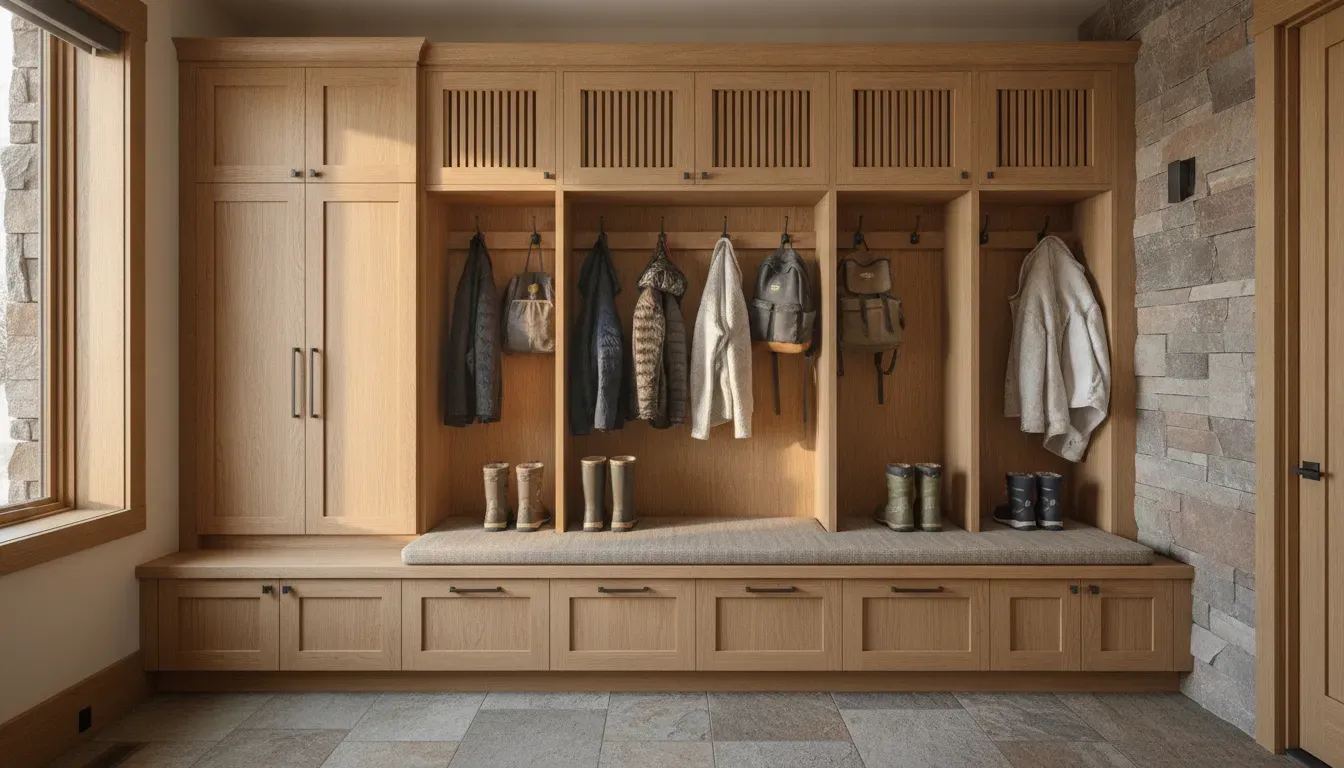
A well-planned mudroom storage system gives snow gear, boots, coats, and everyday bags a clear place to land before they reach the rest of the home. For a Colorado mountain home, the goal is not simply to add hooks. It is to create a durable sequence for arriving, drying, sitting, storing, and leaving again.
Explore custom garage and mudroom storage systems for your mountain home.
The strongest designs combine bench seating, ventilated boot storage, coat and bag zones, moisture-ready surfaces, and a simple plan for seasonal gear turnover. This guide focuses on how to choose and plan that system, rather than repeating a general list of mudroom decorating ideas.
What Should a Mudroom Storage System Include?
A complete mudroom storage system should give each type of gear a logical destination: a bench for changing shoes, ventilated space for damp boots, hooks or lockers for coats, accessible shelves for bags, and closed cabinets for less-used items. The system should also preserve a clear walking path through the entry.
Think of the mudroom as a small piece of home infrastructure. Every component should support one action in the arrival routine:
- Arrive: A defined drop zone keeps bags and outer layers from spreading into the hallway.
- Remove: A stable bench gives people a comfortable place to sit while changing boots.
- Dry: Open or ventilated cubbies allow air to move around damp footwear and gloves.
- Store: Hooks, shelves, drawers, and cabinets separate daily items from reserve gear.
- Leave: A visible, easy-to-reach layout makes the next departure faster.
That sequence is especially useful in active homes where one person may be returning from a snowy trail while another is heading out to school, work, or a ski day. A system that looks organized but interrupts those movements will not stay organized for long.
Start by listing the items that actually enter through the door. Include winter coats, snow pants, ski boots, hiking shoes, helmets, gloves, backpacks, purses, work bags, pet gear, and guest items. Then separate what needs to dry, what needs to be accessed daily, and what can be stored higher or behind doors.
How Do You Plan Zones for Boots, Coats, and Bags?
Plan mudroom zones around the order in which people use them. Put the sit-down bench and boot area where footwear can be removed without blocking the entry. Place coats and bags within one step of the bench, then reserve taller or less accessible storage for seasonal equipment.
Bench seating and the changeover zone
Bench seating is more than a place to sit. It creates a physical transition between outdoor gear and the clean areas of the home. A useful bench should leave enough room to sit without forcing people into the doorway, and it should have storage below for shoes, baskets, or daily accessories.
Open storage beneath the bench works well for items that are used every day. Drawers or doors create a calmer appearance when the room needs to look tidy between visits. In a compact entry, the bench can also define the edge of the wet zone without requiring a separate room.
Measure the space around the bench as carefully as the bench itself. Account for the open door, people carrying bags, and the width of bulky winter clothing. A beautiful seat that narrows the route through the entry will quickly become an obstacle.
Boot ventilation and moisture control
Boots and gloves need a place where air can circulate while they dry. Ventilated cubbies, open shelves, slatted doors, and purposeful gaps can help separate damp footwear from coats and clean accessories. The storage plan should also make it easy to move wet items out of the traffic lane.
Keep the boot zone low and close to the bench so heavy footwear does not need to be carried across the room. Use a tray or other removable surface under the boots to collect ordinary drips and grit, and select flooring that can handle regular cleaning. The system should contain moisture without pretending that storage alone replaces proper cleaning or drying.
For homes with many pairs of boots, assign space by person or activity instead of stacking footwear in one deep pile. That makes it easier to see what is dry, what needs attention, and what belongs in another part of the home.
Coat, helmet, and bag zones
Coats and bags compete for the same wall space, especially when everyone arrives at once. Give each person a repeatable location with a hook, locker, shelf, or combination of the three. Place everyday bags at a comfortable height, while taller compartments can hold ski bags, helmets, or long outerwear.
Open hooks are convenient for the items used every day. Closed lockers help contain visual clutter and give guests a clear place to put their belongings. A shelf above the hooks can hold hats and gloves, but it should not be so high that daily items disappear from view.
High Country Closets designs custom entryway storage for mountain homes around real household routines. That approach is useful when a small entry needs to manage both family traffic and outdoor equipment without making the doorway feel crowded.
Which Materials Hold Up in a Mountain Mudroom?
Choose mudroom materials for repeated contact with wet footwear, grit, heavy coats, and changing temperatures. Durable cabinet surfaces, protected edges, moisture-tolerant flooring, and hardware that can handle daily use matter more than a finish that only looks good on installation day.
Material decisions should follow the zones:
- Flooring: Select a surface that is easy to sweep and mop and that visually separates the entry from cleaner living areas.
- Bench top: Choose a finish that tolerates frequent sitting, bags, and ordinary contact with damp clothing.
- Cubby interiors: Use surfaces that can be wiped clean when boots or gloves bring in grit.
- Hooks and pulls: Choose hardware that feels secure when used with a heavy coat or loaded bag.
- Cabinet edges: Protect exposed corners and high-contact edges from repeated bumps.
A mountain mudroom also benefits from a finish strategy that feels connected to the rest of the home. Warm wood tones, a simple neutral palette, or hardware that echoes nearby rooms can make a highly practical storage wall feel intentional. The goal is not to hide the function. It is to make the function part of the home's design.
If the mudroom shares a circulation route with a closet or wardrobe, coordinate the finish and accessory choices across both spaces. A consistent design language helps a small home feel less fragmented, even when each storage area serves a different purpose. High Country Closets can also help connect the entry plan with custom closet storage elsewhere in the home.
How Should a System Handle Seasonal Gear Turnover?
Plan seasonal turnover by separating active gear from reserve gear. Keep the boots, coats, bags, and accessories used this week within easy reach, then use upper cabinets, deeper shelves, or nearby storage for items that will not be needed until the next season.
Seasonal turnover is easiest when the system does not have to be rebuilt every few months. Adjustable shelving and flexible compartments let a household change the mix of gear without changing the whole layout. In winter, the active zone may need room for snow pants, helmets, and insulated boots. In summer, it may shift toward hiking shoes, sun layers, water gear, and day packs.
Use a simple three-part rule when planning:
- Keep daily gear visible: Put the items used most often on open hooks, low shelves, or in the first available cubbies.
- Move occasional gear upward: Reserve upper cabinets for backup gloves, off-season layers, and items needed less frequently.
- Give bulky gear a separate destination: Oversized equipment may belong in the garage rather than the mudroom. Link the two areas so the entry is not forced to hold everything.
For larger equipment and reserve items, a coordinated garage storage plan can keep the mudroom focused on daily transitions. The most efficient mountain homes do not ask one room to store every item. They give each space a clear job.
When Is a Custom Mudroom Storage System Worth Planning?
A custom mudroom storage system is worth considering when the entry has unusual dimensions, heavy seasonal gear, several daily users, or more than one job to perform. Custom planning can use vertical space, preserve a walking route, and combine open drying zones with closed storage in one fitted layout.
Freestanding furniture can work for a simple entry, but it may leave gaps beside walls, conflict with doors, or waste the height above a bench. A fitted system becomes more valuable when the room includes a narrow passage, a sloped ceiling, a window, a stair, or a changing mix of household and guest gear.
Custom does not have to mean visually busy. A designer can reduce the number of decisions in the room by giving each activity a clear location. The result may be a restrained wall of cabinets, a short bench with hooks, or a combination of open and closed compartments that matches the home's architecture.
High Country Closets offers a free in-home consultation and 3D design rendering so homeowners can review the layout before installation. The same process can help coordinate a mudroom with the home's wardrobe storage, garage, or other high-use spaces.
How Do You Choose the Right Mudroom Layout?
The right layout is the one that makes the household's most common arrival and departure routines feel natural. Choose the storage type, height, and location by observing where people pause, what they carry, and which items create the most clutter.
- Measure the room and route: Record wall lengths, ceiling height, door swings, windows, stairs, and the clear walking path.
- Count the users: Plan hooks, cubbies, and bag storage for residents, frequent guests, and any gear-heavy activities.
- Sort by frequency: Place daily items at the easiest reach and move seasonal or reserve gear to higher or closed storage.
- Separate wet and dry items: Keep boots and damp layers near ventilation and away from clean bags, papers, or stored clothing.
- Test the handoff: Walk through arriving, sitting, removing boots, hanging a coat, and leaving again. Adjust anything that creates a pinch point.
Look at the broader home workflow as well. A mudroom may connect directly to a garage, laundry room, kitchen, or bedroom hall. A storage system that coordinates with nearby rooms can reduce duplicate piles and make seasonal turnover easier. For related planning, see these Colorado mudroom ideas and custom mudroom storage examples, then use the system-planning framework in this guide to decide what your own space needs.
Call 970-818-3321 today to discuss a mudroom storage system for your Colorado home.
Frequently Asked Questions
What is the most useful feature in a mudroom storage system?
The most useful feature is a coordinated drop zone that combines a bench, boot storage, coat hooks or lockers, and a place for everyday bags. Together, these elements support the arrival routine and keep wet or bulky items from spreading into the rest of the home.
How can I ventilate boots in a mudroom?
Use open cubbies, slatted doors, or shelves with intentional air gaps around the footwear. Keep boots low and near the bench, use a removable tray beneath them, and avoid packing damp items tightly together. Ventilated storage supports drying, but wet gear still needs appropriate care.
Should boots and coats be stored in the same area?
They can share the same mudroom system, but they should have separate zones. Boots belong low on a washable or removable surface, while coats and bags need hooks, lockers, or shelves above. Separating the zones keeps damp footwear from crowding hanging items.
How do mudroom storage systems handle seasonal gear?
Use accessible storage for the current season and upper cabinets, deeper shelves, or connected garage storage for reserve gear. Adjustable components help the room change from winter boots and snow layers to summer shoes, day packs, and outdoor equipment.
Is custom mudroom storage useful in a small entryway?
Yes. A custom plan can use vertical space, fit around doors or windows, and preserve the walking path more precisely than unrelated furniture. Even a short wall can combine a compact bench, hooks, a few cubbies, and closed storage when each element is sized for the room.
