
Seasonal Wardrobe Storage Colorado: Closet Storage for Seasonal Wardrobe Rotation
Seasonal wardrobe storage Colorado homeowners can rely on starts with a simple rotation built around the clothes they actually wear, the space they have, and the weather they are dressing for now. A thoughtful system keeps current-season pieces easy to reach while giving off-season clothing a designated place. In Southwest Colorado, where one household may dress for sunny afternoons, cold mornings, and changing mountain conditions, flexible closet zones can make the routine easier.
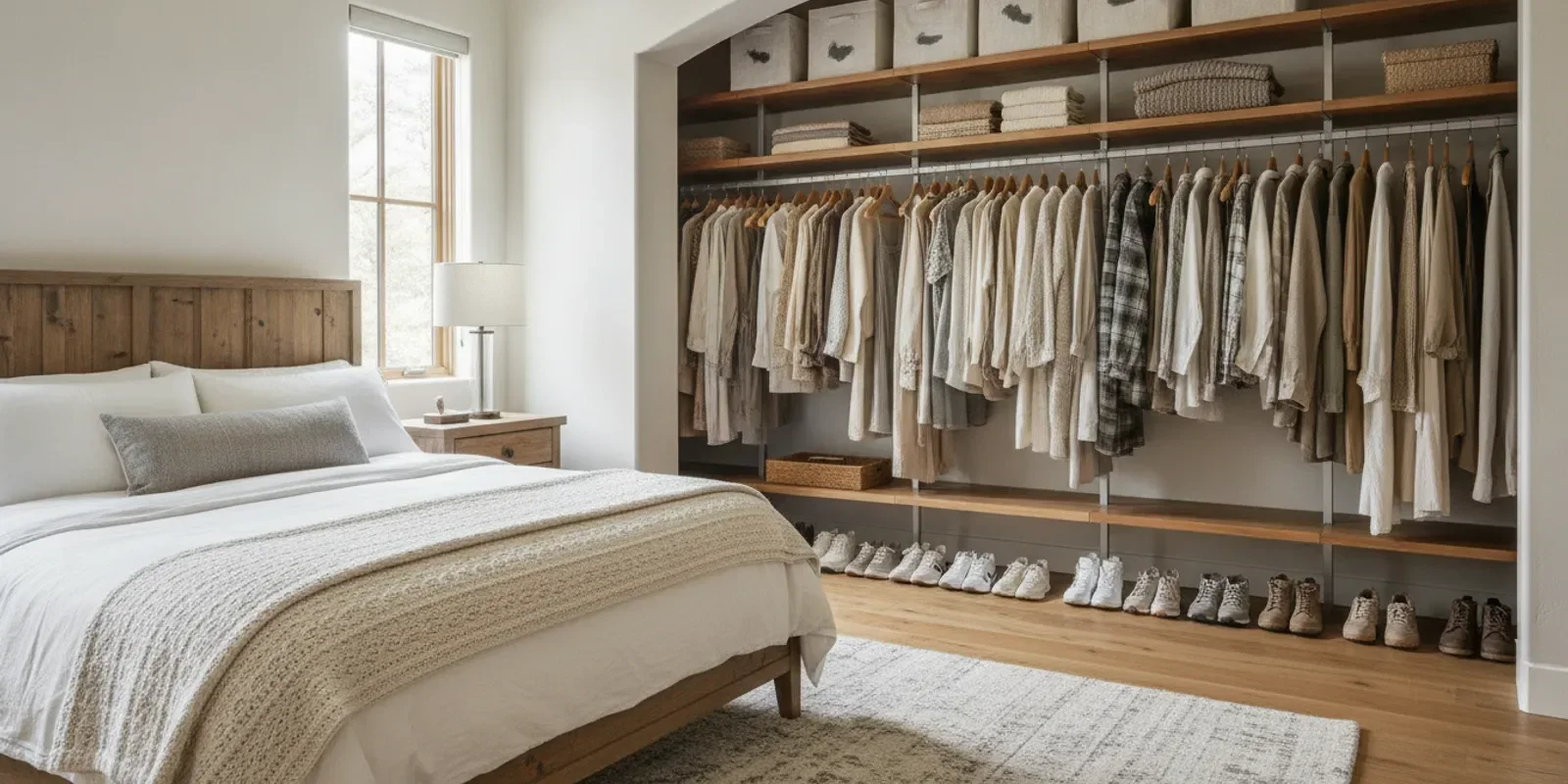
What Is Seasonal Wardrobe Storage?
Seasonal wardrobe storage is a repeatable way to sort, store, and rotate clothing as the seasons change. It is not just putting everything you are not wearing into boxes. The goal is to keep frequently used items accessible, place rarely used pieces in suitable storage, and make the next seasonal changeover straightforward.
A useful system separates clothing into three working groups:
Current season: Items you reach for regularly, placed at eye level or within easy reach.
Transition pieces: Layers and versatile clothing that work across changing temperatures, kept close at hand.
Off-season pieces: Clothing you expect to use later, cleaned and stored in a designated, accessible area.
This approach avoids a complete closet overhaul every few months. It also helps you notice what you own before buying duplicates. For closet layout ideas that can support this kind of rotation, explore custom closet storage options.
Why Does Colorado Call for a Flexible Closet System?
Colorado wardrobes often need more than a simple summer-versus-winter split. In Southwest Colorado, daily temperatures and conditions can shift, and residents may move between town, trails, and mountain settings. A closet should make room for warm-weather clothing, cold-weather layers, and items useful during in-between weeks without letting every category compete for the same shelf.
Homes also differ. A full-time household, a second home, and a vacation rental may need very different storage routines. In a primary residence, everyday access matters most. In a second home, you may want a small, useful selection available without transporting a full wardrobe for every stay. For guest-focused storage planning, see these vacation home storage ideas for Telluride homes.
Rather than assigning every item to a rigid season, plan by use. Keep a light insulating layer accessible during warmer months if cool evenings are part of your routine. In colder months, retain a small set of lighter basics for indoor wear or travel. The exact mix depends on your schedule and preferences; the useful principle is to store only what is genuinely out of rotation.
How Do You Prepare Clothing for Seasonal Storage?
Start with a short review before moving clothing. You do not need to make a permanent decision about every item. Focus first on the garments you know you will not wear for several months.
Check each piece. Look for stains, loose buttons, damaged seams, or items that need repair. Set those aside rather than packing them away unseen.
Clean clothing according to its care label. Follow the garment's instructions and make sure it is fully dry before storage. Clean clothing is easier to put back into rotation without discovering old spills or odors later.
Decide whether it belongs in the next rotation. If you did not wear a piece last season, ask whether it has a clear purpose. Donate or pass along clothing you no longer want, rather than giving it permanent storage space by default.
Group by category. Keep sweaters with sweaters, special-occasion clothing together, and accessories in a small, visible container. Grouping makes it easier to find a specific item later.
Choose storage based on the item. Hang pieces that need to keep their shape and fold suitable knits or casual clothing. Avoid forcing too many garments onto a single hanger or shelf.
Label the destination. A simple label such as "warm-weather tops" or "winter accessories" is more useful than a broad label like "clothes."
Keep the process manageable by working one category at a time. If you pull every item out of the closet at once, the room can become difficult to use before the new system is ready. A small, finished section is better than a large pile waiting to be sorted.
Where Should Current and Off-Season Clothing Go?
Place clothes according to how often you use them and how easy they should be to reach. Everyday items belong in the most accessible part of the closet. Off-season storage can use less convenient areas, but it should still be easy enough to reach that you will actually retrieve the items when the weather changes.
Use these placement ideas as a starting point:
| Clothing group | Best location | Storage approach | Why it works |
|---|---|---|---|
| Current-season daily wear | Eye-level rods, drawers, and open shelves | Keep categories together and leave room to return items | Reduces daily searching and crowding |
| Transition layers | A small, dedicated section near everyday clothing | Hang or fold by type; keep the most-used layers visible | Makes changing conditions easier to manage |
| Off-season clothing | Upper shelves or a separate labeled closet zone | Use clean, dry containers or appropriate hanging space | Frees prime space without losing track of items |
| Special-occasion garments | A protected hanging section or suitable garment storage | Follow care instructions and avoid compressing delicate pieces | Keeps infrequently used clothing identifiable and ready |
| Small seasonal accessories | Drawer inserts, bins, or divided shelves | Sort into visible categories and label the container | Prevents small items from disappearing in a large box |
The table is a starting point, not a fixed rule. A small reach-in closet may need to use vertical space carefully, while a walk-in can have separate zones. See ideas for making a small reach-in closet work harder or review this guide to custom walk-in closet planning for layouts that use different footprints.
Which Storage Containers and Closet Features Help?
The right storage choice depends on the garment, the room, and how often you need access. There is no need to buy a full set of containers before you know what your closet can hold. Sort and measure first, then choose only the storage pieces that fit the planned zones.
Use containers that are easy to identify
Choose containers that fit the designated shelf or cabinet and are easy to lift safely. Clear fronts or straightforward labels can make contents easier to find. Avoid packing clothing so tightly that it is difficult to remove one item without disturbing everything else. A few well-defined containers are often simpler to manage than many small, unmarked boxes.
Reserve hanging space for the right garments
Hanging is helpful for pieces that crease easily or are designed to hang, while folded storage can work well for many knits and casual items. Use the garment's care instructions as your guide. A closet with separate short- and long-hanging areas can prevent empty space below shorter garments and make room for drawers or shelves.
Make shelves and drawers work by category
Keep folded stacks moderate in height so items do not become difficult to reach. Use drawer dividers or small bins for accessories that otherwise mix together. Adjustable shelves can be especially useful when the balance between sweaters, shirts, and accessories changes over the year. For more detail on adaptable shelving, read about ideas for making a small reach-in closet work harder.
Plan the full closet, not only the clothing rail
Seasonal clothing competes with shoes, bags, linens, and other household items for space. Decide which of those belong in the closet before you select a layout. If wardrobe overflow is partly caused by a room without a built-in closet, a custom wardrobe system may be another way to create dedicated hanging and shelf space.
How Can You Keep the Rotation Practical in a Mountain Home?
A rotation system should match the household's real routine, not an idealized calendar. Choose a changeover time that makes sense for you, such as when you notice that one category is no longer being used. Then rotate gradually. You might move heavier layers first and leave versatile basics in place, rather than switching the entire closet in one day.
Give every category a home before the first rotation. If gloves, scarves, belts, and other smaller items are scattered across shelves, seasonal changeover will recreate the clutter you were trying to solve. A small drawer or labeled bin near the clothing zone can keep these pieces together. If your household also needs a better place for coats and day-to-day items near the door, consider the connection between the closet and custom entryway and mudroom storage.
For a second home, keep the storage plan straightforward for anyone who uses it. A clearly labeled shelf or hanging section can hold the essentials that should remain on site. Leave a little open space so guests or family members can put away what they bring. If several people share the closet, assign each person a defined zone rather than mixing everyone's clothing into one set of bins.
Do not treat a garage, attic, or other less-controlled area as automatically suitable for every garment. Consider the conditions in that space and the care needs of the item before storing clothing there. When you need more closet capacity, an indoor organized zone may be easier to inspect and use. For general homeowner information and guidance related to indoor air and home conditions, consult the U.S. Environmental Protection Agency.
How Do You Measure Before Changing the Closet Layout?
Measure before ordering organizers or deciding that you need a larger storage system. Record the available width, height, and depth, and note doors, trim, windows, sloped ceilings, and any other feature that affects access. Then measure the garments or storage containers you plan to keep in that area.
Measure the usable width of each wall, not just the room's overall dimensions.
Note where doors open and whether they block drawers or shelves.
Record the height of the ceiling and any changes in ceiling angle.
Measure the depth of existing shelving and check whether hanging clothing can clear the doorway.
List the quantities of long-hanging garments, short-hanging pieces, folded stacks, shoes, and accessories.
Identify which items must remain easy to reach throughout the year.
These details help distinguish a layout problem from a capacity problem. If there is enough total space but the shelves are poorly placed, adjustable components may solve the issue. If every section is full, it may be time to edit the wardrobe or plan additional storage. This overview of closet design basics can help you think through the space before making changes.
What Does a Simple Seasonal Rotation Look Like?
A repeatable changeover can take place in a few focused passes. You do not need to complete every closet in the home on the same day. Start with one person's clothing or one category, then use the same steps for the next section.
Choose a manageable area. Pick a rod, shelf, or drawer rather than emptying the full closet. Set aside a clear surface for sorting.
Pull only likely off-season pieces. Leave year-round basics and transition layers in place. This keeps the closet functional while you work.
Review, clean, and repair. Follow care instructions, confirm garments are dry, and note anything that needs mending before it is stored.
Move the next season into the easy-access zone. Arrange by category or outfit use, not just by color. Place the most-used garments where you can see and reach them.
Store the outgoing season together. Use designated shelves or containers, label each group clearly, and avoid mixing unrelated household items into the clothing zone.
Make a short note for next time. Record what was difficult to find, what stayed unused, and whether a particular shelf or rod felt overcrowded.
That final note is valuable because a storage system should improve with use. If you repeatedly retrieve one item from an off-season container, it may belong in the transition zone. If a whole box remains untouched through multiple rotations, review whether those items deserve the space. Keep decisions practical: the purpose is a closet that serves your routines, not a perfect inventory.
What Seasonal Storage Mistakes Are Easy to Avoid?
Rotating too much at once. Putting every warm or cool garment away can leave you without useful layers when conditions change. Keep a small, intentional transition group accessible.
Storing items before checking them. A garment with a stain, loose button, or needed repair is easy to forget once it is packed away. Inspect first and set repair items aside.
Using oversized, unmarked containers. Large bins can become heavy and difficult to search. Divide clothing into categories that make sense, and label the contents in plain language.
Filling every shelf to capacity. A closet with no open space is hard to maintain. Leave room to return clothing and make adjustments as needs change.
Ignoring the household's actual habits. A closet designed around an imagined routine will not stay organized. Notice what each person reaches for and place those categories accordingly.
Assuming one storage location suits every garment. Consider the storage area's conditions and the item's care requirements before moving clothing outside the closet.
These small adjustments turn wardrobe storage into a routine rather than a recurring cleanout. The aim is not to own the fewest clothes possible; it is to make what you keep easy to locate, use, and put away.
When Is a Custom Closet Worth Considering?
A custom layout may be useful when a standard rod-and-shelf setup does not match the room or the way you store clothing. Examples include a closet with awkward corners, sloped ceilings, limited floor area, a mix of long and short garments, or shelves that cannot adapt as needs change. A planned layout can assign space to hanging, folded clothing, shoes, and accessories instead of making one storage feature do everything.
High Country Closets provides custom closet solutions, including walk-in and reach-in closets, with an in-home consultation, 3D design rendering, and professional installation. The process begins with an assessment of the room and its use, followed by a personalized design. Learn about custom closet design and installation or visit the company's about page for more on its Southwest Colorado service area and owner-operated approach.
A clear plan also makes it easier to discuss what matters most: quick access to daily clothing, more efficient use of a small closet, or a separate place for items that are out of season. If you are comparing a few layout possibilities, the closet systems buyer's guide offers another framework for considering storage components.
Schedule a free in-home closet consultation
Frequently Asked Questions
How often should I rotate seasonal clothing?
Rotate when the clothing you use regularly changes, rather than following a strict date. In Colorado, conditions can vary, so keep versatile layers accessible and move only the categories you are no longer using. A gradual rotation is often easier than emptying the entire closet at once.
Should I store every item I am not wearing right now?
No. Keep transition pieces available, and store only clothing that is genuinely out of rotation. Use the changeover to identify items that need repair, no longer fit your routine, or are ready to be donated or passed along.
Is folding or hanging better for off-season clothes?
It depends on the garment. Follow its care label and use hanging space for pieces that need it; fold items that are better stored flat. Avoid overcrowding either shelves or rods so clothing is easy to inspect and retrieve.
Where should I keep seasonal wardrobe containers?
Choose a clean, dry place that is appropriate for the clothing and easy enough to access at changeover time. Upper closet shelves can work when containers fit safely and are not too heavy to lift. Do not assume that every garage, attic, or basement has suitable conditions for every garment.
What should I bring to a closet consultation?
Bring your room measurements if you have them, a list of the clothing categories you want the closet to hold, and a few notes about what is frustrating in the current setup. It also helps to identify which items should be easiest to reach. High Country Closets offers a free in-home consultation and 3D design rendering, so the proposed layout can be considered in the context of your room.
Ready to Plan Your Seasonal Wardrobe Storage?
Start with a focused edit, keep transition clothing close, and give off-season pieces a defined place that suits their care needs. When your closet layout makes those choices easy, seasonal wardrobe rotation becomes a small, repeatable task instead of a full-room reset. For a personalized plan in Southwest Colorado, schedule a free in-home consultation with High Country Closets.
