
Garage Organization Ideas for Active Homes
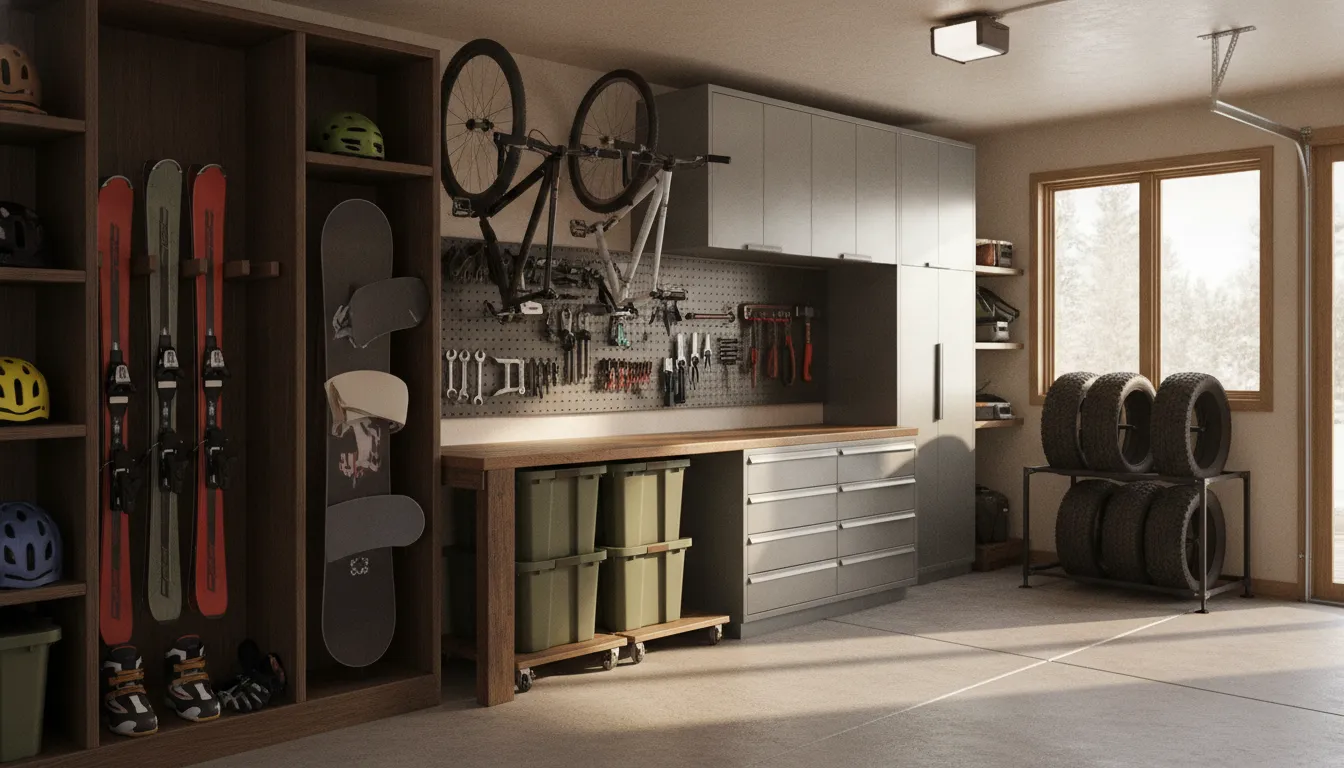
When ski boots, bikes, tools, tires, and summer gear share one garage, the problem is rarely the amount of equipment. More often, each item lacks a clear home and an easy path back to it.
Explore custom garage storage solutions for your active household
The most effective garage organization ideas begin by grouping items according to how your household uses them, then assigning each group a practical zone. In Telluride, Durango, Cortez, Dolores, and nearby Southwest Colorado communities, that may mean a quick-access ski area. A bike and outdoor gear wall, a workshop zone, and higher storage for seasonal equipment.
This approach keeps everyday gear accessible while making room for equipment that rotates with the seasons. It also helps you work with tight layouts, sloped ceilings, and the maintenance routines that come with mountain living. Before choosing cabinets, shelving, or racks, start by mapping the zones around your actual habits and the space available.
How Garage Organization Ideas Start with Zones
The most useful garage plan begins with the way your household moves through the space, not with a shopping list of bins. In Southwest Colorado, one garage may need to handle ski equipment, bikes, hiking gear, tools, seasonal items, and gear that needs drying or maintenance. Dividing that mix into zones gives each category a home and makes the layout easier to adapt as the seasons change.
List what you reach for most often. Start by grouping belongings by activity and access frequency. Daily-use boots, helmets, coats, and household tools should stay within easy reach. Equipment used only during a particular season can occupy higher or less central storage. This simple distinction keeps the most important walking and loading areas clear without hiding items you need every week.
Map a clear path through the garage. Mark the route from the house door to the vehicle, driveway, or work area before assigning shelves and cabinets. Keep frequently handled gear near the route it follows, while avoiding a layout that narrows walking space or interferes with vehicle access. Mountain homes may already have limited garage space, sloped ceilings, and other layout constraints, so measurements matter before storage is selected.
Give each activity a defined zone. Create separate areas for snow gear, bikes and outdoor equipment, tools and workshop work, tires and maintenance, and seasonal storage. The goal is not to create rigid walls. It is to make the next action obvious: dry wet gear in one place, return bikes to another, and keep tools near the surface where projects happen. Specialized equipment racks, custom shelving, cabinets, and workbench integration can support these different routines.
Use vertical space according to access needs. Walls and suitable overhead areas can keep equipment off the floor and preserve usable paths. Place lighter or infrequently used seasonal items higher, and reserve comfortable reach zones for daily gear. Sloped ceilings and elevation-related requirements should be considered during planning rather than treated as an afterthought.
Plan the seasonal rotation. Decide what moves forward when winter sports equipment gives way to summer recreation gear, and where the off-season items will wait. A zone plan can keep seasonal wardrobes, tools, and equipment organized without requiring the entire garage to be rearranged. For homes in Telluride, Durango, Cortez, Dolores, and nearby communities, this rotation is especially practical because one storage area may serve very different routines across the year.
What Belongs in a Ski and Snow Gear Zone?
A ski and snow gear zone should support the entire routine, not just store equipment between trips. In a Southwest Colorado garage, that routine may include unloading skis, setting wet boots somewhere safe. Hanging damp layers, checking bindings, and getting everything ready for the next morning. Organize the zone around those actions so the gear is visible, accessible, and less likely to spread across the floor.
Give Skis, Poles, and Helmets a Clear Home
Start with the longest and most awkward items. Store skis vertically or on a dedicated rack where their edges and poles are contained without blocking vehicles, walkways, or frequently used shelves. Keep poles with the skis instead of creating a second search location. Helmets and goggles belong nearby, ideally in open cubbies or on hooks where they can air out and be grabbed as a set.
Place the equipment used most often at a comfortable reach. Reserve higher storage for backup gear, outgrown equipment, or items used only at the beginning and end of the season. This simple access hierarchy keeps everyday movement easy while making use of vertical wall space.
Plan for Boots, Wet Layers, and Drying
Boots need a place where melting snow and moisture do not damage nearby belongings. A ventilated shelf, drip-friendly tray, or open cubby can keep boots elevated while giving them room to dry. Keep that area near the garage entrance if possible, so wet footwear does not travel through the house. Add hooks or a hanging rail for jackets, snow pants, gloves, and base layers. Separate damp items from clean, dry clothing, and leave enough air space for moisture to escape.
For many active households, the adjacent entryway becomes part of the same daily system. Coordinate the garage zone with entryway gear organization so boots, coats, and helmets have logical homes from the moment they come indoors.
Keep Maintenance Supplies Close, but Contained
Small maintenance items are easiest to use when they are near the gear they support. Use a labeled bin or cabinet section for wax, brushes, straps, spare parts, and tuning accessories. Keep tools and supplies contained rather than placing loose items on a work surface or floor. A nearby workbench can handle tune-ups, while the main ski zone remains focused on storage and daily loading.
The best garage organization ideas account for both storage and movement. Leave a clear staging area where a household can gather skis, boots, poles, and layers before heading out. This planning decision turns a crowded collection of winter equipment into a repeatable routine.
How Should You Organize Bikes and Outdoor Equipment?
Bikes and summer recreation gear are easiest to manage when every item has a clear home and the pieces you use most often stay within comfortable reach. In an active Southwest Colorado household, that may mean storing mountain bikes, helmets, hiking packs. Climbing equipment, paddles, camp chairs, and maintenance supplies without letting them become one large pile.
Start by creating an outdoor-equipment zone near the garage door or another convenient transition point. Keep frequently used bikes closest to the path out, while less-used seasonal gear can move higher or farther back. This simple access rule reduces the temptation to lean bikes against vehicles or stack equipment in front of the items you need next.
Make bikes accessible without sacrificing floor space
Specialized racks can use wall or vertical space to lift bikes out of crowded travel paths. Choose a layout based on how your household actually rides. If bikes leave the garage daily, place them at a height and position that allows quick removal without moving other gear first. If they are used occasionally, a higher or less central location may preserve prime floor and wall access for daily equipment.
Before installing any rack, account for handlebar width, wheel clearance, vehicle doors, walking routes, and the space needed to lift or roll each bike into position. A rack only improves organization when the removal process is as practical as the storage itself. Leave room for helmets and pumps nearby, rather than creating a bike zone that requires a second trip across the garage for basic accessories.
Give helmets and recreation gear a transition area
A small transition area can connect the garage to the rest of the home. Hooks, shelves, or cabinets can keep helmets, gloves, packs, shoes, and smaller equipment together after an outing. Open storage helps with quick access and airing out damp items, while enclosed storage can keep less frequently used gear cleaner and visually contained. Match the solution to the item and its drying needs.
For households in Telluride, Durango, Cortez, Dolores, and nearby communities, summer gear may share space with winter equipment. Use clear categories and flexible shelving so the zone can change as activities change. Vertical planning, custom shelving configurations, and specialized equipment racks are among the custom storage for mountain homes options worth considering when a standard layout does not fit the gear mix.
Finish the zone with a practical reset routine: return helmets and accessories to their assigned locations, keep maintenance items together, and leave the main route clear. The goal is not to display every piece of equipment. It is to make the next ride or outdoor day easier to start.
What Makes a Garage Workshop Zone Work?
A useful workshop zone gives projects a predictable home instead of allowing tools and materials to spread across the garage. Start by placing the workbench where you have enough room to work safely and move larger items around it. Then organize the storage within easy reach of the tasks you perform most often.
Build storage around the workbench
The workbench should be the center of the zone, not an island surrounded by random boxes. Keep frequently used hand tools close to the work surface, using cabinets, shelving, or a dedicated tool-storage area that lets you see what is available. Small project supplies can stay in labeled containers, while larger materials need open shelving that makes their size and quantity easy to judge.
Cabinets are useful for items that need protection from dust, clutter, or accidental bumps. They also help keep sharp tools, finishes, and other less frequently used supplies contained. Open shelving works well for regularly accessed equipment, project bins, and materials that you want to identify without opening a door. A combination of both gives the workshop flexibility without making every item visible.
Keep projects moving from setup to cleanup
Think through the full workflow before assigning storage. A typical project may involve choosing a tool, bringing materials to the bench, making a repair, and putting everything away. Store those related items near one another when possible. For example, hand tools can stay closest to the work surface, power tools can occupy a nearby cabinet or shelf, and project materials can sit in a clearly defined area that does not compete with the bench.
This arrangement reduces the number of trips across the garage and protects the workbench from becoming a permanent dumping ground. It also makes cleanup easier because every category has a visible destination. When shelving and cabinets are planned around the workbench, the zone can support routine maintenance as well as longer projects.
For more ways to plan a practical project area, explore our garage workshop storage ideas. The right layout will depend on your tools, materials, available wall space, and how often the workshop is used. But the goal remains consistent: keep the surface usable and the tools accessible.
Which Garage Organization Ideas Fit Each Activity Zone?
The right storage piece depends less on appearance than on what you reach for, how often you use it, and whether it needs to stay visible. Active Southwest Colorado households may move between ski gear, bikes, tools, tires, and seasonal items throughout the year. A useful system gives frequently used equipment an easy-to-reach home while containing less attractive or less frequently used items.
Adjustable shelving is a flexible choice for bins, boots, helmets, maintenance supplies, and changing collections of gear. Open shelves make contents easy to see, which helps a family return items to the right location. Review heavy-duty garage shelving when planning a shelving area, especially where vertical space can reduce floor congestion. Keep the most frequently accessed items between waist and shoulder height, and reserve higher shelves for seasonal storage.
Storage piece: Adjustable shelving Best for: Bins, boots, helmets, tools, and changing gear collections Planning note: Use open shelves for visibility and adjust spacing around item height.
Storage piece: Cabinets Best for: Small parts, maintenance supplies, cleaning products, and visual containment Planning note: Place closed storage near the work area, and keep contents labeled and accessible.
Storage piece: Specialized racks Best for: Skis, poles, bikes, paddles, and other long or bulky equipment Planning note: Match the rack location to the path from the vehicle or entry door.
Storage piece: Work surfaces Best for: Bike adjustments, tool projects, packing, and seasonal maintenance Planning note: Leave clear standing space and position supplies within comfortable reach.
Cabinets are most useful when containment matters. They can keep small parts, chemicals, and visually busy supplies out of sight while still placing them near the workbench or maintenance zone. This guide to garage storage cabinets can help you think through that combination of access and containment.
Specialized racks solve a different problem: item shape. Skis, bikes, and other long equipment often waste usable space when they lean against walls or collect on the floor. A rack can keep those items visible and easier to return, provided it does not narrow the vehicle path or block a frequently used doorway. Work surfaces then support the activities that happen around the gear, from tuning and repairs to sorting and packing. Together, these pieces create garage organization ideas that follow real routines instead of forcing every item into the same type of storage.
Schedule your free, no-obligation in-home consultation to plan your garage zones
Frequently Asked Questions
What are some DIY ideas for organizing my garage?
Start by grouping belongings into zones for ski gear, bikes, tools, tires, and seasonal equipment. Remove items you no longer use, then place frequently used gear between waist and shoulder height. Use labeled containers for small items, reserve high storage for seasonal equipment, and keep a clear path to the vehicle and entry door.
What is the best way to organize your garage?
The best approach is to plan around how your household uses the space. Give each activity a defined zone, place daily gear near the access point, and keep maintenance items near a work surface. For mountain homes, account for tight layouts, sloped ceilings, and seasonal gear changes before choosing shelving, cabinets, or racks. Zone planning for mountain homes can help guide those decisions.
How can I effectively organize my garage?
Measure available walls and ceiling height, inventory bulky items, and identify what needs immediate access versus occasional access. Then assign storage by item type and frequency: racks for equipment, cabinets for protected supplies, shelving for bins, and a work surface for projects. This approach supports active households managing both winter sports equipment and summer recreation gear, as described in the garage storage guide.
What are common garage organization mistakes?
Common mistakes include storing everything at floor level, blocking vehicle or door clearances, mixing unrelated gear, and choosing storage before measuring the space. Avoid placing wet equipment in an unplanned pile, leaving tires and tools without a designated area, or putting seasonal items where they compete with daily-use gear. Review the layout as seasons change so the system remains practical.
Ready to Build a Garage Plan Around the Way You Live?
A thoughtful garage plan can make room for the gear your household uses throughout the year while keeping everyday items easier to reach.
Schedule your free, no-obligation in-home consultation for a custom garage plan
