Garage Storage Ideas for Colorado Mountain Homes
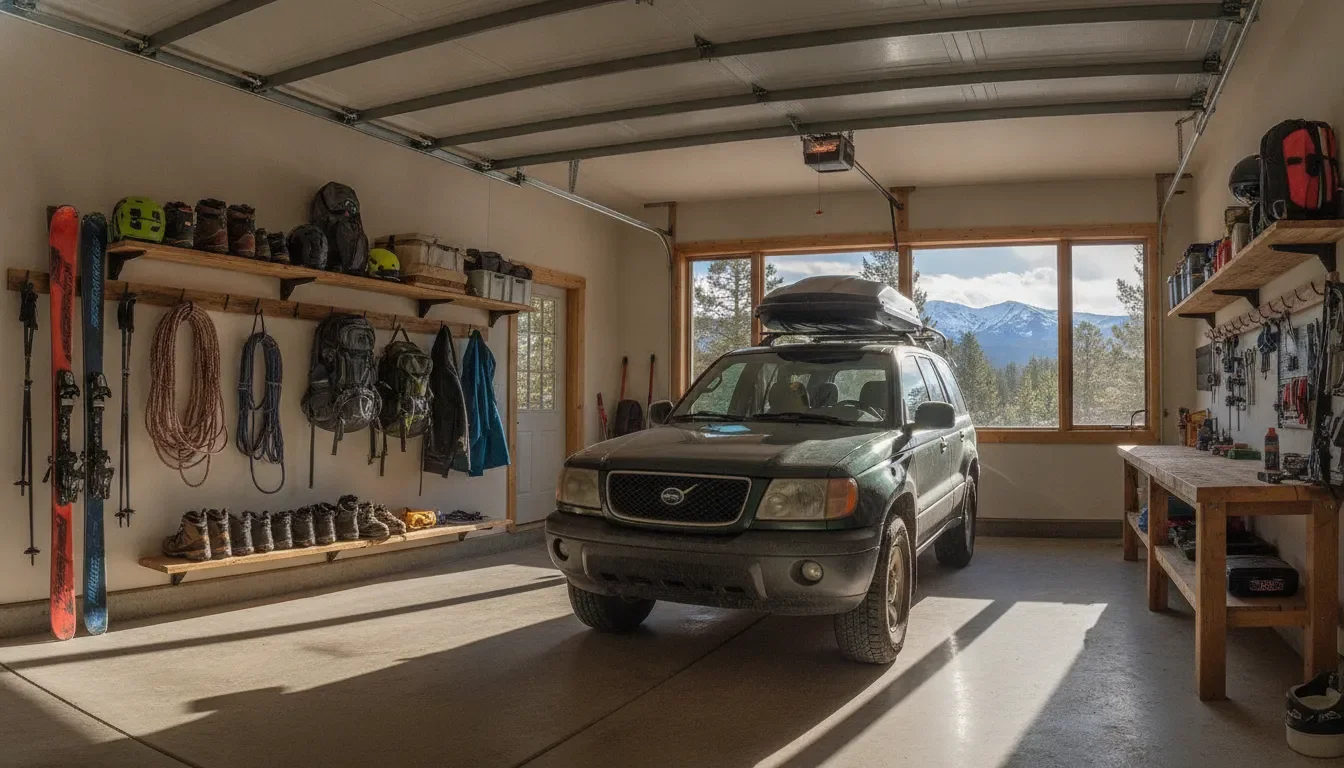
In a Durango or Telluride garage, storage has to handle more than a car and a few boxes. Snow-covered skis, muddy boots, bikes, tools, and seasonal gear move through the space as the year changes, and freezing temperatures and mountain moisture test every material and mounting point.
The most practical garage storage ideas create dedicated, reconfigurable zones for vehicles, skis, bikes, tools, and trip-ready gear. Wall-mounted racks and durable slatwall keep bulky equipment visible and off the floor, while cabinets, floor shelving, and carefully selected overhead storage handle heavier or less frequently used items.
Explore custom garage storage for your Southwest Colorado home.
A successful system starts by recognizing that a mountain garage is part workshop, gear room, staging area, and vehicle shelter. The right layout makes those roles work together without sacrificing safe access or usable floor space.
Why Mountain Home Garages Need a Different Storage Approach
A garage in Durango or Telluride is more than a place to park. It is the transition zone between demanding outdoor conditions and the comfort of home. Vehicles bring in snow melt, road grit, and mud. Boots, helmets, packs, skis, bikes, and off-road equipment arrive wet or dusty after a long day outside. A storage plan that works in a mild suburban climate can quickly become crowded, dirty, and difficult to maintain in Southwest Colorado.
Seasonal change also drives the way mountain households use their garages. The gear cycle can shift four or more times each year. Ski season gives way to summer biking and hiking, then hunting, camping, and off-road activities take over. Each transition changes what needs to be accessible, what can move higher on the wall, and which items need a dedicated drying or staging area. Reconfigurable storage makes those changes practical instead of forcing every new season into the same fixed arrangement.
Start by treating the garage as a series of working zones. Keep frequently used boots and daily outdoor gear near the entry and create room for loading trips, and reserve wall or cabinet space for bulky equipment that cannot stack neatly. A designated sports-gear zone helps contain irregular items, while a small staging area near the garage door can simplify loading and unloading before a mountain outing. These decisions help you organize your garage for mountain life without sacrificing clear paths for vehicles and people.
The building itself adds another layer of pressure. South- and west-facing walls can absorb intense heat and ultraviolet exposure at altitude, so sensitive equipment should not be stored directly against those surfaces. Overnight temperatures can fall below freezing, creating conditions that affect wet gear, finishes, and temperature-sensitive equipment. A thoughtful layout separates heat-sensitive or moisture-prone items from the areas where the climate is most severe.
Floor materials must be ready for the daily mess. Moisture-resistant, cleanable flooring is better suited to snow and grit tracked in by vehicles, and it makes seasonal cleanup less disruptive. Epoxy-coated concrete, rubber tiles, or waterproof vinyl can be appropriate choices for high-traffic transition areas. Moisture-resistant surfaces also support easier cleanup and mold prevention, which matters when wet boots and gear share the space.
Finally, organization has to include periodic editing. As equipment changes, remove items that no longer support how your household lives. Periodic decluttering keeps valuable storage space manageable and prevents each seasonal shift from becoming a full garage reset. In a high-performance mountain home, organization is not a decorative upgrade. It protects equipment, supports faster transitions, and keeps the garage working as hard as the people who use it. Explore garage shelving for mountain homes to see how durable, adjustable systems can support that changing rhythm.
Compare the Best Garage Storage Systems by Need
The right system depends on what your garage needs to hold, how often you use it, and how the gear cycle changes through a Southwest Colorado year. A wall rack may be ideal for bikes and shovels, while a cabinet is better for chemicals, small tools, or items that need protection from dust. Start by assigning zones for sports equipment, vehicles, workshop supplies, and trip staging. Designated zones help keep bulky, irregular gear organized rather than scattered across the floor. For additional planning ideas, explore these custom garage storage solutions.
System: Wall-mounted racks Best For: Bikes, skis, shovels, and bulky tools. Mountain Home Benefit: Uses vertical space and keeps wet or muddy gear off the floor. Effort: Moderate
System: Ceiling or suspended racks Best For: Seasonal bins, camping gear, and holiday items. Mountain Home Benefit: Preserves floor space for vehicles and active-season equipment. Effort: Moderate to high
System: Storage cabinets Best For: Small tools, chemicals, hardware, and private supplies. Mountain Home Benefit: Protects contents from dust and conceals visual clutter. Effort: Moderate
System: Slatwall or pegboard Best For: Frequently used hand tools and changeable accessories. Mountain Home Benefit: Allows the layout to adapt as ski, bike, and workshop needs shift. Effort: Moderate
System: Floor shelving Best For: Heavy bins, machinery, fluids, and large containers. Mountain Home Benefit: Provides stable, low storage for items that should not be mounted overhead. Effort: Low to moderate
Wall-mounted systems are often the strongest starting point in a crowded garage. Vertical storage maximizes usable floor area, which makes it easier to open vehicle doors and move safely around parked cars. Vertical bike racks can create meaningful capacity in a narrow bay, especially when several bikes compete with skis and outdoor tools for the same wall.
Ceiling racks are useful when the items are seasonal and infrequently accessed. They should not become a default location for heavy equipment or anything needed every day. Cabinets offer a cleaner, more secure option for hazardous chemicals and sharp tools, while adjustable shelving handles bins and gear that change size throughout the year. Choose slatwall when you expect the layout to evolve. In Colorado garages, composite or PVC slatwall also resists the humidity cycling that can warp standard pegboard.
For heavy machinery and vehicle fluids, use sturdy floor-based shelving and keep the load low. Before making structural changes, confirm the installation requirements and applicable local building codes. A well-planned combination usually outperforms a single storage product because each system is assigned to the type of gear it handles best.
Wall-Mounted Garage Storage Ideas for Skis, Bikes, and Tools
Wall-mounted storage turns unused vertical space into a practical gear system, especially when a garage needs to hold skis, bikes, shovels, and everyday tools without narrowing the vehicle lanes. In Southwest Colorado, the best setup also responds to altitude, seasonal moisture, and the steady change from ski season to biking and hiking season.
Protect skis and snowboards from heat and moisture
Store skis and snowboards vertically on purpose-built wall racks. Vertical storage keeps equipment off the floor, makes each pair easy to identify, and reduces the chance that gear will sit in snowmelt or puddles. The University of Vermont recommends a cool, dry, dark environment for off-season ski storage to help preserve bases and edges. Learn more about proper ski storage conditions.
Choose the wall carefully. Keep racks away from south- and west-facing walls that absorb intense heat and ultraviolet exposure at Colorado elevations. Excess heat can warp boards and damage bindings, turning a convenient storage location into a source of premature equipment wear. For more ideas tailored to local gear cycles, explore these ski gear storage ideas.
Build a wall system that can handle Colorado conditions
For a flexible wall, high-density composite or PVC slatwall is usually a better long-term choice than standard pegboard in a Colorado garage. Humidity can shift sharply as snow-covered equipment dries, temperatures change, and wet vehicles enter the space. Slatwall resists the warping and cracking that can make less durable panels look uneven or loosen their accessories over time. Its continuous channels also let you reposition hooks, shelves, and baskets as the household moves through its gear cycle.
Heavy-duty utility hooks provide a dependable home for bulky items such as bikes, shovels, garden tools, and awkward recreation equipment. Vertical wall storage systems can maximize floor space in a crowded garage, while hooks keep irregular items contained and off the walking surface. Install each hook into an appropriate structural support and match its rated capacity to the gear it carries. The goal is a clear path around vehicles, not simply more objects attached to the wall. Garage shelving can complement the wall system for bins and items that should remain at a reachable height.
Keep everyday tools and bikes within reach
Use a magnetic strip for frequently used metal hand tools such as drivers, wrenches, or pliers. A visible row makes tools easier to return after a project and frees valuable slatwall or pegboard space for items that need hooks or small shelves. Pegboard can still work for lighter hand tools, but its flexibility does not remove the need to select a panel that suits the garage climate.
In a narrow garage, a vertical bike rack is one of the most efficient ways to reclaim floor area. It stores each bike upright against the wall and preserves room for doors, vehicles, and gear staging. Place bikes near the route they take into the house, then reserve nearby hooks for helmets and pumps. A well-planned wall system keeps high-use gear visible, protects expensive equipment, and remains adaptable as the seasons change. Source guidance for vertical storage and utility hooks includes garage wall storage research.
Use the Ceiling for Seasonal Off-Season Gear
Overhead storage can reclaim valuable floor space in a Colorado garage, but it should have a narrow job. Use the ceiling for items that leave the garage for part of the year, such as holiday decorations, camping equipment, or empty seasonal bins. Keep daily-use gear at eye level or within easy reach, and treat every overhead rack as a safety system rather than unused space waiting to be filled.
Sort everything by weight and frequency. Start with a floor-level staging area and group items by season. Light, infrequently used items belong in ceiling-mounted containers. Heavy machinery, dense boxes, vehicle fluids, and chemicals belong on sturdy, floor-based shelving, where their weight is supported low and stable. This approach reduces the risk of a loaded rack becoming difficult to access or structurally overloaded. It also keeps the overhead zone limited to the seasonal items it is designed to hold.
Check the rack and follow the installation instructions exactly. Confirm the product's stated weight limit, mounting requirements, and clearance before installation. Fasteners, spacing, and attachment points matter, especially when a rack is suspended above a vehicle or walkway. The U.S. Consumer Product Safety Commission has reported overhead garage storage rack recalls involving impact-injury hazards, so do not improvise a mounting method or assume that a ceiling joist layout will work without following the manufacturer's instructions. Read the CPSC recall notice for a documented safety concern.
Reserve overhead space for seasonal gear. Place camping bins, holiday decorations, and other infrequently used containers overhead. Use sturdy, closed containers and label them on more than one visible side so the gear cycle stays manageable. Leave enough clearance to open the garage door, park safely, and walk beneath the rack without striking a corner or reaching over a vehicle.
Give winter sports equipment its own rack. Skis, snowboards, and wet winter gear need specialized storage rather than a crowded overhead bin. A purpose-built rack allows equipment to dry and helps avoid moisture buildup. For more planning ideas, review these ski and snowboard storage options for Colorado homes.
Store skis in a cool, dry, dark location during the off-season. Before putting skis away, make sure they are clean and fully dry. Choose a location away from persistent heat and direct light, then protect the edges and bases from conditions that can contribute to deterioration. The University of Vermont recommends a cool, dry, dark environment for preserving ski equipment during the off-season. Inspect the rack and equipment before the next season, and remove anything that no longer fits the storage plan.
Build a Durable Tool and Workshop Station
A mountain garage works better when repairs have a home of their own. Start with a designated workbench sized for the projects you actually handle, whether that means tuning a bike, sharpening a shovel, or repairing a piece of outdoor equipment. Keeping these tasks localized prevents loose fasteners, hand tools, and work materials from spreading across vehicle bays and walkways. A dedicated workspace also makes it easier to pause a project without dismantling the entire garage. The CDC notes that an organized repair workspace supports safer work by keeping tasks contained. Review the workplace safety guidance when planning your station.
Give tools mobility without losing control
Pair the bench with a rolling tool chest. Mobile storage lets you move frequently used tools to the vehicle, workbench, or driveway instead of carrying several handfuls back and forth. It is especially useful in garages that change with the seasons. A tool chest can sit beside the bench during a repair, then roll against a wall when skis, bikes, or snow equipment need more room. Lock the casters before working, and keep the chest positioned so drawers open without narrowing the main walking path.
Use the wall above and beside the bench for the tools you reach for most often. A magnetic strip can hold metal hand tools where they remain visible, while a compact organizer can separate bits, fasteners, and measuring tools. These custom tool organizer ideas can help you design storage around your actual workflow rather than forcing every item into a standard drawer. Keep heavier equipment on stable lower shelves, and reserve the work surface for active projects.
Plan for different sizes and changing projects
Adjustable-height shelving makes the station useful beyond one hobby. Set a lower shelf for a compressor or large case, a middle shelf for labeled bins, and narrower upper spaces for supplies that need to stay within reach. As shelf positions can change, the system can accommodate a new battery-powered tool or a different mix of seasonal equipment without adding a second pile on the floor. For more layout inspiration, explore these garage workshop ideas for Colorado mountain homes.
Use lockable cabinets for chemicals, solvents, automotive fluids, and sharp tools. The CDC recommends secure storage for hazardous materials and sharp equipment, particularly when children can access the garage. See the related safety guidance. Place these cabinets where they stay dry, away from direct heat, and out of the path of vehicles. Lock them after each use instead of treating the workbench as temporary storage.
Finally, bring lithium power-tool and e-bike batteries indoors during freezing weather. Batteries stored below 32 degrees Fahrenheit can permanently lose capacity, so a garage is not an appropriate winter location when temperatures drop below that threshold. Store batteries in a dry indoor area at a safe distance from heat sources, and return them to the workshop when conditions are suitable. This small habit protects expensive equipment while keeping the station ready for the next repair.
Flooring, Ventilation, and Lighting for a Safer Garage
A well-organized garage needs to handle more than storage. In Southwest Colorado, snow, grit, mud, and melting ice move through the garage with vehicles, boots, and outdoor gear. The right surfaces and safety details protect the space while making daily routines easier.
Choose a floor that can handle snow and grit
High-traffic areas should use moisture-resistant, slip-resistant, and easy-to-clean flooring. Epoxy-coated concrete, rubber tiles, and waterproof vinyl are practical options for transition zones near vehicle doors and entry points. Each provides a more durable, cleanable surface than unfinished concrete when snow melt and road grit are part of the daily gear cycle. The CDC-supported guidance on garage and workshop safety also emphasizes flooring that can be kept clean and free of hazards: review the source guidance when planning a larger workspace.
Keep pathways open from the house entry to the vehicle bays and from storage areas to the main garage door. Clear routes reduce trip and fall risks, especially when bulky skis, shovels, bikes, or muddy footwear are moving in and out. If you are refining the entire layout, these ideas can help you keep your mountain garage organized through changing seasons.
Control air quality and place heavy items low
Never run a vehicle in an enclosed attached garage, even when the garage door is open. Carbon monoxide is a serious risk, and garages or workshops need proper ventilation. A carbon-monoxide detector adds another layer of awareness, but it does not replace safe vehicle practices or adequate airflow. Plan mechanical equipment and work areas so exhaust cannot collect near interior doors or living spaces.
Use sturdy, floor-based shelving for heavy machinery, dense tools, and chemical agents. Store the heaviest items on the lowest shelves to reduce the chance of a shelf or storage system collapsing. Vehicle fluids should remain sealed, upright, and securely stored so a leaking container cannot create a spill or slip hazard. Locking storage is especially appropriate for chemicals and sharp equipment in homes where children or guests may enter the garage.
Make every item visible and every change compliant
Adequate lighting helps you locate equipment safely and spot snow melt, spills, and obstructions before they become problems. Use bright, even illumination over work surfaces, shelving, and walking routes rather than relying on a single overhead fixture. Durable mountain garage shelving can support this approach when shelves, lights, and clear access paths are planned together.
Before making structural changes, anchoring major systems, or modifying the garage for new storage, check applicable local building codes and ordinances. A practical safety plan should protect the people using the garage, the gear stored there, and the structure itself.
Talk with High Country Closets about the right storage plan for your mountain garage.
Frequently Asked Questions
What should go in the easiest-to-reach garage storage zone?
Place the gear you use most often near the entry door or vehicle, including boots, helmets, gloves, daily tools, and trip-ready bins. A defined staging area makes loading and unloading easier, while less-used holiday, camping, and off-season items can move to higher shelves or overhead storage.
How should I store skis and snowboards in a Colorado garage?
Store skis and snowboards vertically on a wall-mounted rack, with space for them to dry without blocking a walkway. Keep the rack away from south- and west-facing walls or other heat sources, where temperature swings can affect boards and bindings. A cool, dry, dark location is best for off-season ski storage.
Are slatwall panels better than pegboard for a mountain garage?
Slatwall is often the better long-term choice for Colorado garages because its adjustable accessories can be repositioned as your gear changes, and PVC or composite panels are less vulnerable to humidity cycling than standard pegboard. Pegboard still works well for lightweight hand tools in a dry, stable workshop area.
Where should I store power-tool and e-bike batteries?
Keep lithium power-tool and e-bike batteries indoors rather than in an unheated garage. Southwest Colorado temperatures can fall below freezing, and storage below 32 degrees Fahrenheit can permanently reduce battery capacity. A dry, temperature-controlled utility area is a safer location.
Get started with a garage storage plan
A well-planned system can help your garage handle changing gear, tools, and vehicle needs throughout the year. For a practical approach tailored to your Southwest Colorado mountain home, call High Country Closets at (970) 403-2455 to schedule a free consultation. We can help you think through zones, wall storage, seasonal gear, and durable materials before you commit to a layout.