
Overhead Garage Storage for Colorado Mountain Homes
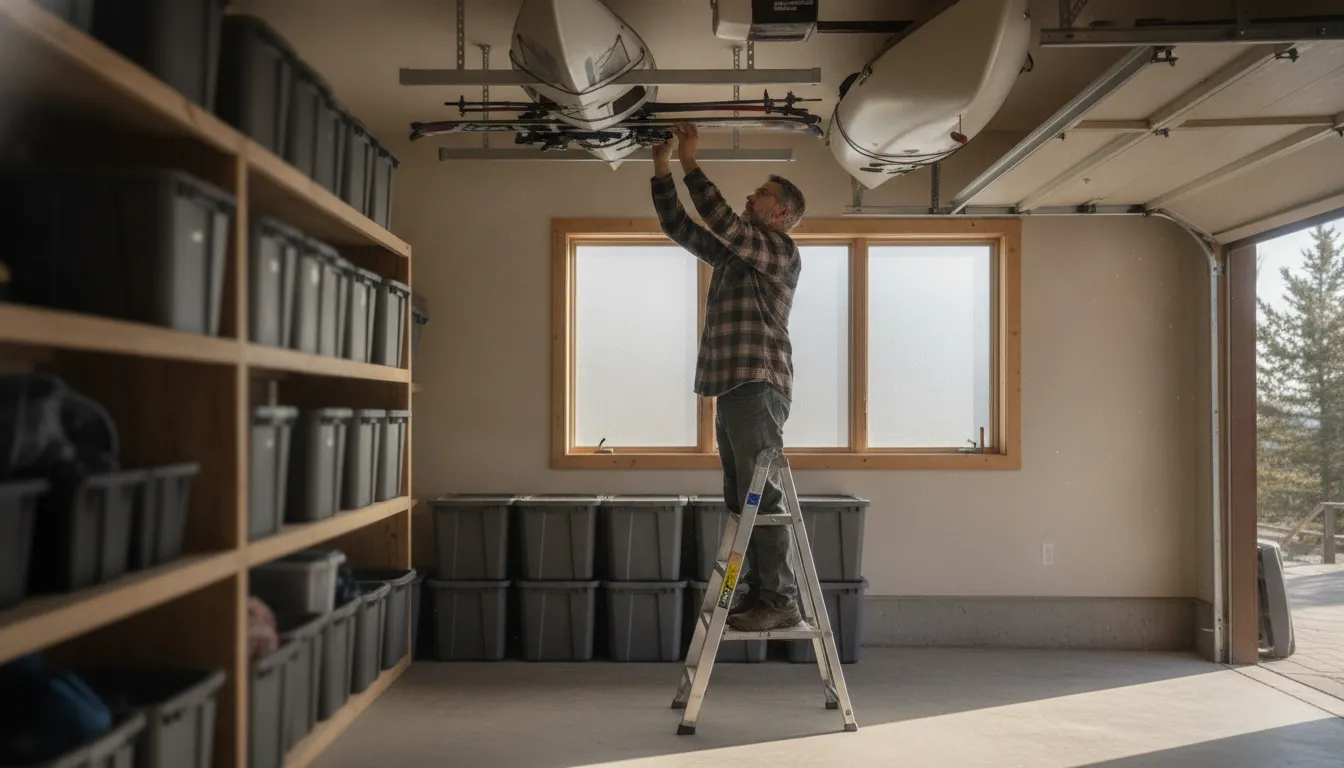
In a Colorado mountain home, garage space disappears quickly under skis, kayaks, camping gear, and bins that serve different seasons. The floor may be full, while the ceiling above your vehicles remains unused. A well-planned system can reclaim that space without making everyday gear difficult or unsafe to reach.
Schedule a free in-home design consultation for your Colorado garage.
Overhead garage storage uses ceiling-mounted racks, lifts, or platforms to keep bulky and seasonal items off the floor. The safest, most useful setup is anchored to structural framing, matched to the garage's ceiling height and load limits, and arranged around the gear you actually own. Custom design matters because a kayak, ski collection, and storage bins each need different clearances, support, and access.
Before choosing a rack, it helps to understand how these systems attach, move, and create usable zones in a real garage. That foundation makes it easier to judge which items belong overhead, how much clearance you need, and where a custom solution can outperform a one-size-fits-all kit.
What Is Overhead Garage Storage and How Does It Work?
Overhead garage storage uses the open space above your vehicle, workbench, and floor-level cabinets to organize items that do not need to be within reach every day. Instead of allowing bulky gear and seasonal bins to occupy valuable floor space, a ceiling-mounted rack supports those items above your normal work area. For homeowners in Telluride, Durango, Cortez, and Dolores, this can make a tight, gear-heavy garage feel more usable without adding another room. See our guide to garage shelving for mountain homes for related ways to reclaim floor space.
Most systems begin with a platform or rack suspended from the garage ceiling. The rack is anchored to appropriate structural framing, then sized and positioned around the garage layout. You might use it for storage bins, camping equipment, spare household items, or other large pieces that are used occasionally. Overhead racks are specifically designed to make more efficient use of otherwise unused vertical space, as illustrated by overhead rack systems from Fleximounts.
Ceiling-mounted racks for bulky and seasonal gear
A rack works best when the items stored there are relatively stable and easy to load or unload safely. Large bins can be grouped by season, while bulky gear can be kept off the floor and out of the path of vehicles, doors, and daily projects. Gladiator describes its overhead GearLoft system as a way to create secure off-the-ground storage for large and bulky items, including the type of equipment that often takes over a mountain garage. You can see that approach in its overview of overhead garage storage.
The key is to treat the ceiling as one zone in a larger organization plan, not as a place to put everything you cannot sort. Keep frequently used items at eye level or near the garage entrance. Reserve overhead space for seasonal gear and rarely used bins. With heavier or awkward pieces placed where they can be handled without stretching, climbing, or moving several other items first.
Lift systems for easier access
Some overhead solutions use a lift or pulley mechanism instead of a fixed platform. The storage surface can be lowered when you need to load or retrieve gear, then raised out of the way when finished. This can be useful for long, bulky equipment or for garages where a fixed rack would be difficult to reach. The lift still needs careful planning around ceiling height, door operation, framing, and the weight of the stored items.
A well-designed system should match your garage dimensions and your actual gear rather than forcing your belongings into a generic layout. The result is more than empty floor space. It is a practical extension of your custom garage storage plan, built around how your household uses the garage throughout the year.
Why Overhead Garage Storage Fits Colorado Mountain Homes
In Telluride, Durango, Cortez, and Dolores, a garage often serves as more than a place to park. It may hold skis, snowboards, camping equipment, kayaks, bikes, tools, seasonal decorations, and the bins that make a mountain home work year-round. When all of that gear competes for floor space, the garage can become difficult to use precisely when you need it most. Overhead garage storage puts less frequently used equipment above the activity zone, leaving the floor available for vehicles, projects, and daily access.
This approach is especially useful because Southwest Colorado gear changes with the calendar. Skis and snowboards can move overhead during the summer, while kayaks, camping equipment, and other warm-weather gear take their place at the end of winter. That seasonal rotation is a practical use of vertical space, not just a way to make the garage look tidier. Overhead systems are commonly used for seasonal gear cycling, including storing skis in summer and kayaks or camping gear in winter.
Make room for the gear you actually use
A useful garage has zones. Active gear should stay near eye level, where it can be reached without moving several other items. Seasonal equipment can occupy wall or ceiling space, while rarely used bins belong farther out of the way. This arrangement reduces the familiar problem of unloading half the garage to reach one piece of equipment. It also keeps bulky items off the floor, where they can block vehicles, collect moisture, or become a tripping hazard. For a full room-by-room routine, read our guide to organizing your garage for mountain life.
Climate makes the storage decision more important in a mountain home. Temperatures can fall below zero in January and rise above 100 degrees Fahrenheit in July. Those swings, along with changing humidity, can be hard on materials that are not suited to the environment. Standard hardboard pegboard, for example, can warp through Colorado's humidity cycling. High-density composite slatwall and appropriately selected storage components provide a more durable foundation for a garage that sees these extremes.
Plan around specialized equipment and changing conditions
Custom planning matters when the stored items are long, oversized, unusually shaped, or expensive to replace. A kayak, a rack of skis, and a stack of labeled bins each require a different approach to support, clearance, and access. A well-planned system accounts for the home's ceiling layout, the equipment's dimensions, and the order in which the family changes gear throughout the year. It should also keep lithium batteries for e-bikes and power tools indoors, since they lose capacity below 32 degrees Fahrenheit and should not be stored in an unheated garage.
For mountain homeowners, the goal is not simply to add another rack. It is to create a durable storage plan that follows the household's seasons and protects the space needed for everyday life. High Country Closets brings local Southwest Colorado experience to that planning, designing systems around specific gear rather than a generic template. Explore custom garage storage for a solution built around your home's layout and mountain routine.
What Can You Safely Store Overhead in a Garage?
The best overhead storage holds items that are bulky, seasonal, or rarely needed, rather than anything you reach for every day. In a mountain-home garage, that often means kayaks, skis, snowboards, camping equipment, and labeled seasonal bins. Moving these items above the garage floor protects valuable workspace and keeps vehicles, tools, and walkways easier to use. Overhead racks are specifically designed to create secure, off-the-ground storage for large items such as kayaks and bins, provided the system is rated and installed for the load.
Match storage height to how often you use the gear
A simple garage-zones plan keeps storage practical. Put active gear at eye level or within easy reach. Helmets, frequently used tools, and the equipment you grab before a weekend outing should not require a ladder or moving three other containers. Place seasonal gear on the wall or overhead, then rotate it as the weather changes. Rarely used bins, holiday items, spare equipment, and keepsakes can occupy the highest locations.
This approach matters in Southwest Colorado, where the garage may serve as a gear room, workshop, and vehicle bay at the same time. A kayak used throughout summer can move overhead during winter, while skis and snowboards can be stored out of the way when water and camping gear take priority. For skis specifically, see our ski gear storage ideas for Colorado mountain homes. Seasonal overhead storage makes that rotation intentional instead of turning the garage floor into a permanent stack of equipment. The seasonal-cycling principle is also supported by storage guidance from SafeRacks.
Good candidates for overhead storage
- Kayaks and other long, bulky recreation equipment, using supports that distribute weight rather than concentrating pressure at one point.
- Skis and snowboards, stored vertically on a wall system or in a purpose-designed overhead arrangement. Do not leave them horizontally on the floor, where moisture and contact can cause damage.
- Camping gear, sleeping bags, coolers, and other equipment used only during certain seasons.
- Durable, clearly labeled bins containing decorations, spare household supplies, or rarely used items.
Keep a little clearance around every item so it can be removed without dragging adjacent gear down. Use containers with secure lids for dusty or damp environments, and do not place loose objects where vibration or a careless bump could send them falling. Storage areas should remain free of accumulations that create tripping, fire, or falling-material hazards, consistent with the safety principles outlined in OSHA storage requirements.
Do not store lithium batteries in a cold garage
E-bike batteries and removable batteries for power tools do not belong in overhead garage storage. Lithium batteries lose capacity below 32 degrees Fahrenheit, so bring them indoors and follow the manufacturer's charging and storage instructions. The same zoning principle applies to battery-powered equipment: store the tool where it is convenient, but keep the battery in a temperature-controlled space. With the right division between active, seasonal, and rarely used gear, overhead garage storage adds capacity without making essential equipment harder or less safe to access.
Ceiling Height and Structural Considerations Before You Install
Before choosing an overhead garage storage rack, measure the space from the finished floor to the ceiling. Then account for the rack depth, stored gear, vehicle height, garage-door operation, lighting, and walking clearance. A rack that fits on paper can still make it difficult to open a hatch, park a tall truck, or retrieve a kayak safely. Plan the storage zone around how your garage is actually used, not just the empty space above it.
The attachment point matters more than the appearance of the rack. The U.S. Consumer Product Safety Commission recall involving SafeRacks and Monsterrax overhead garage storage racks stated that these systems must be installed into structural framing members to help prevent failure and impact injuries. Read the CPSC recall alert before treating a ceiling-mounted system as a simple weekend project.
Weight planning is equally important. Add the weight of the rack, containers, and every item you expect to store, then follow the manufacturer's stated limit rather than relying on a visual guess. Overloading can compromise both the storage system and the ceiling structure supporting it. In Colorado mountain homes, the existing ceiling and roof structure also deserve careful review because snow-related roof-load requirements and construction details vary by home. A qualified installer should assess the structure before recommending where and how to anchor the system.
| Consideration | DIY retail kit | Professional custom installation |
|---|---|---|
| Framing verification | Depends on the homeowner locating suitable framing and using the correct hardware. | Anchoring is planned around verified structural framing members, as required for safe installation. |
| Weight rating | Uses the published rating, which can be exceeded when mixed bins and gear are added casually. | Storage capacity is planned around the actual rack, containers, and gear load. |
| Ceiling structure assessment | Usually limited to a visual check, with roof-load context left to the homeowner. | Accounts for ceiling construction, clearance, and the structural realities of a mountain home. |
| Fit for tall items, such as kayaks | Fixed dimensions may interfere with vehicles, doors, lights, or retrieval paths. | Layout and height are tailored to the garage, vehicles, kayaks, skis, and access needs. |
| Long-term safety | Depends on correct installation, loading, inspection, and future use by the homeowner. | Combines a deliberate layout with installation guidance that supports safer ongoing use. |
These checks are especially valuable when the garage stores bulky equipment above vehicles or near a frequently used work area. A custom plan can reserve the highest locations for rarely used bins while keeping active gear accessible and preserving clearance below. For Southwest Colorado homeowners, that structural review is part of designing dependable overhead garage storage, not an optional final detail. High Country Closets can evaluate the available space and build the layout around your home and gear.
How Overhead Garage Storage Is Installed
A ceiling-mounted rack should be treated as a structural installation, not simply a place to hang a few hooks. In a mountain-home garage, the process needs to account for ceiling height, roof framing, vehicle clearance, changing gear needs, and the weight of the items stored above. A careful installation protects the rack, the garage, and the people moving beneath it.
- Assess the ceiling height and available clearance. Start by measuring the distance from the garage floor to the ceiling, then account for garage doors, openers, lighting, vehicles, and walking paths. The goal is to use overhead space without creating a low obstruction or making it difficult to load and remove bulky gear. A rack may need to sit higher in one bay and lower in another, depending on how the garage is used.
- Verify the ceiling's structural capacity. Before choosing a rack or deciding how much gear it will hold, inspect the framing and consider the additional load. Mountain homes may also have roof-load considerations related to snow, so the ceiling should not be treated as interchangeable with a flat, unfinished storage surface. If the structure or framing is unclear, have the installation conditions evaluated before proceeding. Ceiling structural integrity and load limits belong at the beginning of the plan, not after the rack is purchased.
- Locate and mark the joists or rafters. The installer identifies the actual structural framing members and marks their positions before drilling. Fasteners need to engage those members, rather than relying only on drywall, thin sheathing, or an unverified ceiling surface. The U.S. Consumer Product Safety Commission has warned that ceiling-mounted storage systems must be installed to structural framing members to prevent rack failure and impact injuries. Review the CPSC SafeRacks and Monsterrax recall alert for the safety rationale.
- Set and follow the weight limits. Calculate the intended load, including containers and any future gear, and compare it with the manufacturer's stated capacity. Do not assume that a large rack can safely hold any combination of bins, skis, tools, or seasonal equipment. Overloading can compromise both the rack and the ceiling structure supporting it, so weight limits should remain visible in the household's storage plan.
- Anchor the rack to the framing members. With the layout confirmed, install the rack level and secure every required connection into the marked joists or rafters. Check clearances again before tightening the installation. Proper anchoring is what keeps the system stable as gear is loaded, removed, or shifted over time. It also reduces the risk of a failure that could send a rack or stored items into the vehicle or onto someone below.
- Organize the garage by use zone. Finish by placing frequently used items where they can be reached safely, while reserving overhead space for seasonal or rarely used gear. Keep heavier items within the system's approved capacity and avoid loose objects that could slide or fall. A clear zone plan makes the overhead space useful without turning every seasonal change into a ladder-and-bin project.
Retail Kits vs. Custom-made Overhead Garage Storage
Retail kits can look like an efficient answer when the goal is to get bins and bulky gear off the garage floor. Their fixed dimensions and generic mounting layouts work best when the garage, climate, and equipment all resemble the assumptions behind the product. Mountain homes rarely cooperate that neatly.
A standard kit may leave a kayak extending into a vehicle path, force skis into an awkward position, or waste clearance above a garage door. It can also create a storage shelf that is technically available but difficult to reach safely. The result is often a second layer of floor clutter: ladders, loose gear, and items that were never a good fit for the rack in the first place. Overhead storage is most useful when it supports how your household actually loads, unloads, and rotates gear through the year.
Mountain gear does not come in one standard size
Skis, snowboards, kayaks, camping bins, paddleboards, and seasonal tools each have different shapes, weights, and handling requirements. A generic template cannot reliably account for all of them. Custom design starts with an inventory of the gear you own, the equipment you add seasonally, and the items that need to remain easy to grab. Learn how custom garage storage for mountain homes applies the same principles at scale. The layout can then separate active gear from seasonal gear instead of placing everything in one inaccessible overhead grid.
That distinction matters in a gear-intensive home. Frequently used equipment should stay within practical reach, while rarely used bins can move higher. A custom system can also account for ceiling height, garage-door movement, vehicle clearance, wall conditions, and the safest route for lifting long or bulky items into place. High Country Closets builds systems around specific gear rather than asking your gear to conform to a store-bought frame.
Colorado climate exposes weak materials
Southwest Colorado garages experience significant temperature and humidity cycling, from subzero winter conditions to summer temperatures above 100 degrees Fahrenheit. Materials that seem acceptable in a climate-controlled showroom may move, swell, or warp in those conditions. The customer knowledge base specifically notes that standard hardboard pegboard can warp with Colorado humidity cycling, which is why a more durable high-density composite is preferred for relevant storage components.
Climate durability is not a cosmetic detail. A warped panel or loosened component can make gear harder to organize and may reduce confidence in the entire system. Custom planning allows the material choices, mounting approach, and storage zones to reflect the actual mountain environment instead of a generic national average. It also makes room for specialized needs that retail kits often overlook, such as keeping temperature-sensitive lithium batteries indoors rather than in an unheated garage.
For homeowners who want a durable layout without sacrificing usable space, explore custom garage storage designed for the demands of mountain living. The goal is not simply to hang a rack overhead. It is to create a dependable system for the gear, climate, and daily routines in your garage.
Contact High Country Closets to design your overhead garage storage today.
Frequently Asked Questions
Is overhead garage storage worth it?
For gear-heavy mountain homes, it can be a practical way to reclaim floor space without giving up access to seasonal equipment. A well-planned system keeps rarely used bins, skis, kayaks, and camping gear organized overhead while active gear stays within reach. The value comes from using the ceiling as part of a complete garage layout, not simply adding a rack wherever space is available.
What is the best overhead garage storage?
The best system matches the gear, ceiling height, available clearances, and structural framing in your garage. Adjustable racks may work for uniform bins, while custom supports can better accommodate kayaks, long skis, snowboards, and mixed-size equipment. Weight limits should always follow the manufacturer's specifications, since overloading can compromise the rack and ceiling structure.
What are some ideas for ceiling storage in a garage?
Use overhead space for seasonal bins, camping equipment, kayaks, skis, snowboards, and other bulky items that do not need daily access. Create zones so active gear remains at eye level, seasonal gear moves to the wall or ceiling, and rarely used bins occupy the highest storage area. Keep lithium-battery equipment indoors because batteries can lose capacity below 32 degrees Fahrenheit.
How do you make overhead storage in a garage?
Start by assessing ceiling height, vehicle clearance, framing, and the weight of the items you plan to store. Ceiling-mounted systems must attach to structural framing members to reduce the risk of failure and impact injury, as noted by the U.S. Consumer Product Safety Commission: CPSC recall guidance. A professional design can then position supports, distribute loads, and organize access around your garage's actual geometry.
Schedule Your Overhead Garage Storage Consultation
A thoughtful design can help your garage accommodate seasonal gear while keeping everyday access clear. Schedule a free in-home design consultation with High Country Closets to discuss your space and see a 3D rendering of your overhead garage storage before it is built. Contact us to get started for service in Telluride, Durango, Cortez, and Dolores.
