
Sports Equipment Storage Garage for Active Families
In Southwest Colorado, one garage may hold the gear for a winter day on the slopes, a summer ride, and a weekend team game. When equipment for different activities gets mixed together, finding the right pieces can slow down the whole household. A useful system starts with how your family uses each item, not with a row of matching containers.
Schedule a free in-home consultation
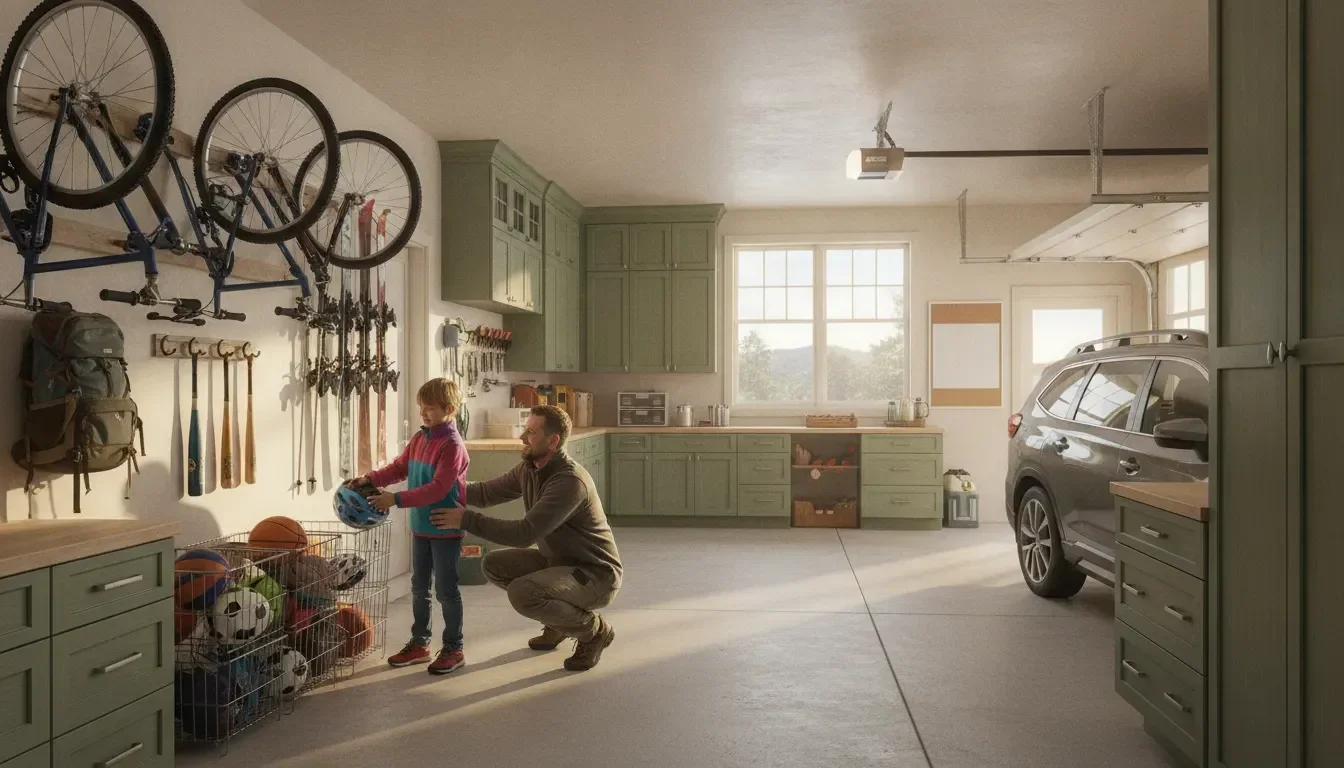
Effective sports equipment storage garage planning groups gear by activity and how often it is used, then gives each item a clear, convenient place to return. That can make everyday equipment easier to find while keeping seasonal gear organized until it is needed.
For families in Telluride, Durango, Cortez, Dolores, and nearby communities, the mix may include skis, bikes, hiking packs, and sports bags. A well-considered custom garage storage system can bring those different needs together. First, decide what the storage must make easier in your daily routine.
What Does Sports Equipment Storage in a Garage Need to Do?
Good sports equipment storage in a garage gives each item a clear place where household members can find it and put it back. It also keeps gear out of walking and vehicle paths. A useful setup should suit the actual equipment and family routines, not just make the room look tidy.
That means balancing three practical needs: access, fit, and clear space. Balls, helmets, bags, bats, rackets, and bulky items have different shapes and handling needs. A single shelf or a row of hooks is unlikely to serve every item equally well. Choose storage that keeps small loose pieces together, gives frequently used gear a convenient place, and accommodates larger equipment without forcing it into a walkway.
Access matters on both sides of an outing. Before practice, family members should be able to gather the right gear without moving unrelated items. When they return, the storage should make it straightforward to put each piece back where it belongs. If only one person knows where everything goes, the arrangement may be orderly but it is not working well for a shared household. Keep everyday equipment within comfortable reach for the people who use it, and reserve less convenient locations for items that are used less often.
Fit also includes the routes around the storage. Consider how equipment is carried in and out, where a vehicle door opens, and which paths need to remain unobstructed. A storage choice that holds gear but blocks those movements solves only part of the problem. Avoid placing equipment where it can fall into a traffic path, and check attachment points and clearances before installing wall-mounted storage.
This equipment-focused approach is different from planning broad garage zones. Rather than redesigning the whole garage by function, start with the sports gear the household uses, how each item is handled, and where it can be reached and returned with minimal reshuffling. Then select suitable shelving and specialized racks. High Country Closets designs custom garage storage for sports gear, along with systems for tools, ski gear, and seasonal items.
A useful setup is not defined by how many organizers it contains. It is defined by whether the gear stays accessible, organized, and out of the way during ordinary family routines.
How Can You Map Sports Equipment Storage Garage Zones by Activity?
Start with the equipment your household reaches for together, then give that activity a clear home. A simple map keeps sports equipment storage garage planning grounded in actual routines rather than a row of unrelated organizers. In a Southwest Colorado household, the mix may include team gear, bikes, hiking equipment, and winter sports items, with different pieces moving in and out as the season changes.
Group by activity, not just item type. Put the items used for one outing together: for example, balls, shoes, and a bag for practice, or packs and trekking poles for a hike. Keep shared accessories near the main equipment so the household can gather what it needs without searching several corners. Small groups can share a larger zone if they are used for similar outings.
Rank each group by how often it is used. Set everyday or weekly gear in the easiest-to-reach area, while equipment used occasionally can sit higher or farther back if it remains safely accessible. NIOSH guidance recommends placing equipment close to where it will be used and raising stored materials to avoid heavy lifting from ground level. Apply that as a practical handling principle, choosing a reachable height for the people who will put gear away: NIOSH equipment-storage guidance.
Measure the gear and its retrieval space. Note the longest, widest, and tallest pieces in each activity group, along with bulky bags or protective equipment. Also account for the room needed to pull an item out, carry it through the garage, and return it without shifting neighboring gear. Measure doors, vehicles, and fixed obstacles before choosing a location; a storage spot that fits an item but blocks its path is not a useful zone.
Put the next action within reach. Think through the sequence from arrival to departure. If a family member grabs a bag, shoes, and a ball on the way out, those items should be easy to locate together. Leave a visible place for gear that is being returned or sorted, rather than letting it spill into a walking route. Keep access paths to vehicles and the house clear, including space to open doors and carry longer equipment safely.
Test the map with a real routine. Walk through a typical departure and return, then adjust anything that requires repeated lifting, moving another group, or stepping around equipment. If several activities need distinct corners or shared access, review broader garage zones for active households for full-garage planning. Keep this map focused on where sports gear belongs and how it moves in and out.
Marking the zones on a quick sketch can help reveal overlaps before storage is installed. The useful plan is the one that lets each household member find and put away the gear they actually use.
Which Storage Works for Balls, Bats, Helmets, and Team Gear?
Small, loose pieces need a clear return point. A sturdy open basket or dedicated ball corral keeps soccer balls, playground balls, and other shared equipment together while letting family members see what is available. Choose a spot near the route into the garage, not behind a vehicle or a stack of seasonal gear. If balls roll out or get buried, adjust the container or its location so putting equipment away is as simple as taking it out.
Bats, sticks, and similar long items are easier to manage when stored vertically in a purpose-built rack or a designated wall zone. Keep the ends contained and the items grouped by activity, so they do not lean across a walkway or fall into the space needed to move other gear. Any wall-mounted option should be installed with appropriate attachment to the wall structure and checked for vehicle, door, and walking clearances. For larger or heavier equipment, see these garage racks for bulky sports equipment.
Helmets benefit from a consistent shelf, cubby, or open storage spot where they are easy to find and not crushed beneath bags. The CDC advises keeping hockey helmets away from extreme temperatures and direct sunlight, and says not to store them in a car. Its hockey helmet guidance gives those care instructions. For baseball or softball batter's helmets, the CDC offers the same temperature and sunlight guidance and says not to store them in a car in its batter's helmet factsheet. A garage layout should make it possible to follow that advice rather than leaving helmets in a parked vehicle.
For households with children, put frequently used balls, gloves, and bags at a height they can reach and return independently. Reserve higher shelves for equipment adults handle or items used less often. Revisit the arrangement as children change teams, activities, or equipment sizes, and move items that no longer fit the current routine out of the everyday zone.
Gear type.Storage approach.Balls.Open basket or corral.Bats and sticks.Vertical rack or wall zone.Helmets.Open shelf or cubby.Bags.Shelf, cubby, or cabinet by activity.
Accessible return points can work alongside durable cabinets for garage gear storage when some equipment needs a more enclosed place. High Country Closets offers custom shelving and specialized equipment racks as part of its custom garage storage for sports gear, tailored to item size and family access.
How Should Bikes and Bulky Equipment Fit Without Blocking the Garage?
A bike is only conveniently stored if it can leave its spot without a chain reaction. Before choosing a mount or rack, trace the route from storage to the garage door. Include handlebars, pedals, bags, and the space needed to turn the bike. Check that this path does not cross a vehicle door, a frequently used walkway, or the place where sports bags are set down.
For bikes used often, an open floor position may be the simplest choice if it keeps the route clear. A wall-mounted option can free floor area, while an overhead location may suit equipment that is used less frequently. Choose a position that household members can reach and return without awkward lifting or moving other gear. Any wall or ceiling attachment should be selected and installed for the actual structure and intended use. Keep bulky items away from garage-door hardware, lights, and the vehicle's full path, including when doors open.
Look at the garage with the car parked where it normally sits, not just when the space is empty. Check clearance around mirrors, doors, the hatch, and the walking route between the vehicle and the house. A bike stored neatly against a wall can still create a bottleneck if its pedals project into that route. If several bikes share the area, leave room to remove one without having to shift every other item.
Large recreation equipment also needs a clear retrieval path. Long or awkward items may fit better on a dedicated wall or overhead rack than in the middle of the floor. The right arrangement depends on the ceiling, vehicle height, and how often the equipment is used. For a deeper look at bike-specific layouts, see these mountain bike storage ideas for Colorado garages. The separate guide to garage racks for bulky sports equipment covers rack placement and clearance considerations in more detail.
Think of the final layout as a sequence: park, walk through, reach the gear, and carry it out. If any step requires moving a vehicle or climbing over equipment, adjust the storage position before adding more organizers.
How Do Families Rotate Sports Gear Between Seasons?
A seasonal rotation works best when every item has a clear status: active, in transition, or stored long term. In Southwest Colorado, a family's garage may shift from skis and snowboards to bikes, hiking packs, and water-sports equipment as conditions and plans change. Keeping those groups distinct makes it easier to find what is in use without letting the next season's gear disappear behind it.
Keep current-season gear easiest to reach
Place the equipment used this week where family members can retrieve and return it without moving other gear. That might mean keeping snow gear accessible during winter, then shifting bikes or trail equipment forward when those become regular choices. Store each activity's smaller pieces together with its main equipment so a last-minute outing does not turn into a search across several shelves.
Give changing gear a transition spot
At the season change, move outgoing equipment to a temporary review area rather than pushing it directly into a high shelf or cabinet. Separate anything damp or dirty from items ready for closed storage; moisture management matters in the home, as the EPA's guide to mold and moisture explains. This is only a staging step, not a substitute for equipment-specific care instructions. For a more detailed approach to wet equipment, see the guide to garage gear drying stations.
Use the transition to check which pieces still fit the household's activities and needs. Families with growing children can set aside outgrown items for a separate decision, rather than mixing them back into the active group. Keep gear that may be used again soon visible enough to reassess, then decide what to donate, pass along, or remove only after confirming it is no longer needed.
Move long-term gear out of the daily path
Once the season's equipment is ready to put away, place it in a designated long-term area. Keep the next activity's gear and everyday garage access clear. Shelves, cabinets, or specialized racks can be combined according to the equipment and available space. High Country Closets designs garage systems for sports equipment, ski gear, and seasonal items. A separate cold-weather garage storage guide covers active, transition, and longer-term storage in more detail.
When the next season approaches, bring only the relevant group back into the active area and repeat the review. This keeps the rotation tied to real family routines instead of treating every item as equally urgent all year.
When Is a Custom System a Better Fit Than Scattered Organizers?
Separate baskets and hooks can be useful, but a household with several activities may need a layout that coordinates different equipment sizes, access needs, and seasonal routines. A custom system is worth considering when gear repeatedly spills into a walking path, family members cannot reach what they need, or equipment has no clear place to return after use.
The right design can combine custom shelving, specialized equipment racks, cabinets, and open access areas. The goal is not to add a fixture for every item. It is to create a practical arrangement that keeps sports equipment, ski gear, tools, and seasonal belongings accessible without letting one category take over the garage. Durable commercial-grade materials and weather-resistant finishes are among the features High Country Closets lists for its garage systems.
Begin with the items and routines that cause the most friction. Note which gear is used frequently, which pieces are awkward to lift or carry, and where the vehicle and household entry need clear passage. Those details help determine whether a shelf, rack, cabinet, or combination best fits the garage. Avoid choosing a system based on appearance alone; consider how each household member will retrieve and return what they use.
High Country Closets serves Telluride, Durango, Cortez, Dolores, and surrounding Southwest Colorado communities. Its documented service process includes a free in-home consultation, a tailored design plan with 3D rendering, and professional installation. Homeowners can explore custom garage storage for sports gear and use the consultation to discuss the equipment mix and available space.
A coordinated system can be especially useful when the garage needs to support multiple activities through the year. Keep the decisions grounded in the space, gear, and access patterns of your household, then choose storage components that serve those needs together.
Frequently Asked Questions
What is the best way to store sports gear in a garage?
Group equipment by activity, keep the gear used most often within easy reach, and give loose or long items a suitable place to return. Leave clear paths for people, vehicles, and equipment moving in and out. For a household with winter and summer activities, keep current-season gear accessible and review the layout as routines change.
What is a good sports organizer for a garage?
The best organizer depends on the equipment. Open baskets can corral balls and smaller pieces, while shelves, cabinets, and specialized racks can suit bags, helmets, and larger or longer gear. Check that the organizer fits the item and does not block a door or walking route. A mix of storage types often serves a varied family gear collection better than one universal fixture.
What are the best ways to store fitness equipment?
Keep exercise items together in a defined area. Store frequently used pieces within reach. Place heavier items where they can be moved without awkward lifting. Use shelves or cabinets only when they suit the equipment and the space. Leave room to take items out and return them without blocking a garage path.
How can a family keep seasonal sports gear organized?
Separate active gear from equipment in transition and items being stored long term. As activities change, move the current gear into the easiest-to-reach area and place outgoing equipment in a designated review space before putting it away. Keep damp or dirty items separate from closed storage and follow the care instructions for each piece of equipment.
When sports gear, bikes, and seasonal equipment compete for the same garage space, a plan built around your family's activities can make everyday access easier. High Country Closets designs custom garage systems with tailored shelving and specialized equipment racks for households in Southwest Colorado.
A free in-home consultation is the first step to discuss your equipment, routines, and available space. The team can develop a tailored design plan with 3D rendering and professional installation as part of its documented service process.
Schedule a free in-home consultation for your garage storage plan.
