
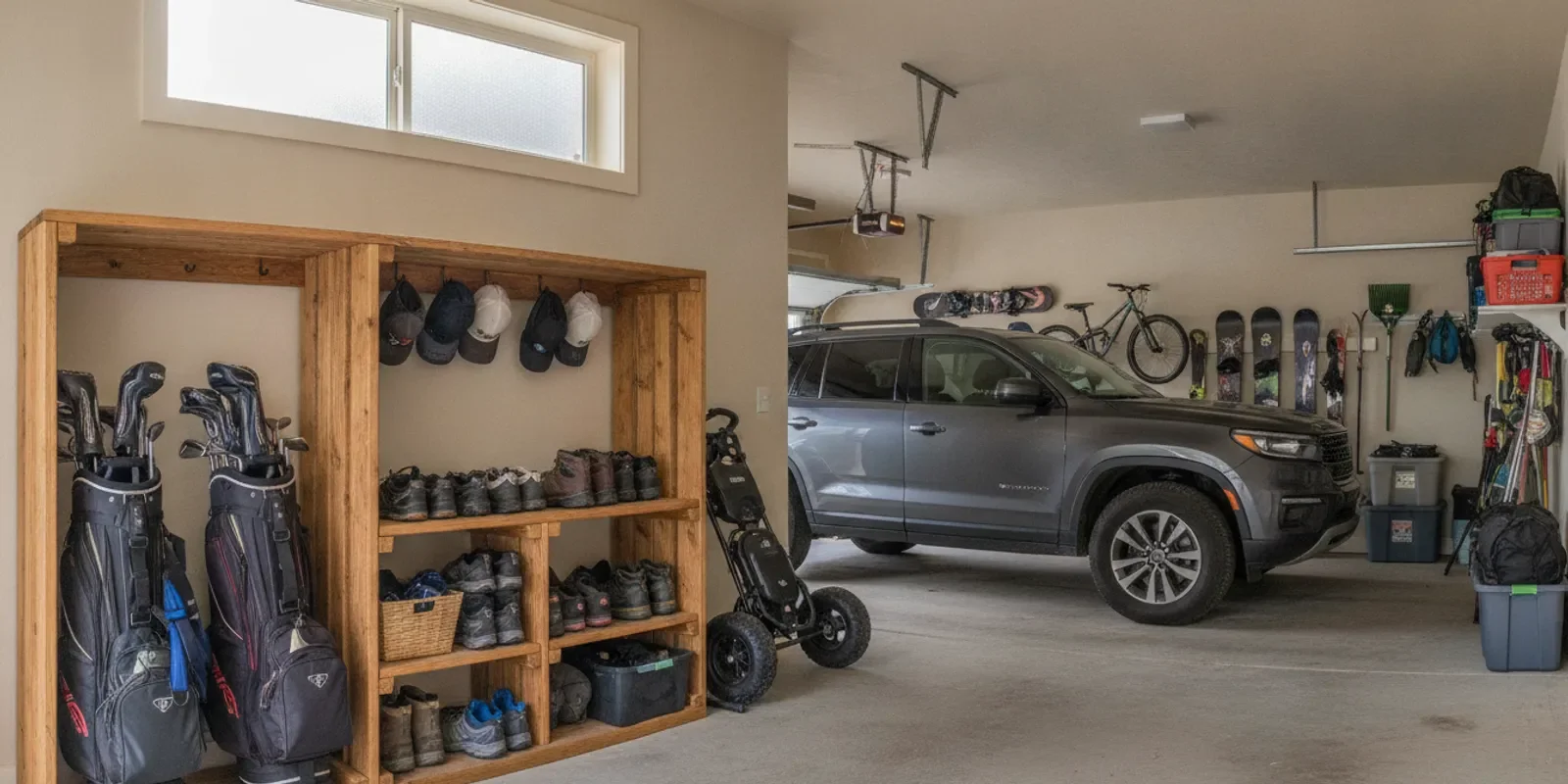
Good garage golf gear storage gives every bag, shoe, and small accessory a dependable place without making the car harder to park. In a Southwest Colorado home, golf equipment may share the garage with skis, bikes, tools, and seasonal supplies. A useful setup starts with the gear you own, the route you use, and the space that remains available after the vehicle is parked.
What Should Garage Golf Gear Storage Make Easier?
Begin with the routine, not a shelf or rack. Think through what happens before and after a round. You might carry a bag from a parked car, add shoes and a jacket, then return with a damp towel or muddy shoes. A layout should make these ordinary steps easy without requiring you to shift boxes or move another personâs equipment.
Write down the golf items in your household. Include each full bag, spare clubs, push cart, shoes, balls, tees, gloves, towels, hats, rain layers, and practice aids. Note which items belong to each golfer. Shared storage can work, but the design should account for all the gear that needs a home, not only the largest bag.
Next, record what currently causes friction. Perhaps a bag sits behind the car, shoes are mixed with household supplies, or accessories disappear into a workbench drawer. Identify whether the problem is access, visibility, damp items, competing activities, or a lack of a consistent return spot. A specific problem points toward a practical fix.
Sort items into three groups: used for most rounds, used occasionally, and stored only during part of the year. Keep frequently reached equipment closest to the natural carrying route. Give occasional-use items a nearby but less prominent place. Seasonal belongings can use a less accessible zone, provided they remain safe to retrieve. These same planning principles appear in garage organization ideas for active homes and garage organization systems for mountain homes.
How Do You Measure a Garage Golf Storage Zone?
Measure the area while the garage is being used normally. Park each vehicle in its usual position, then record the open floor area, wall width, ceiling height, and any obstructions. Include steps, utility equipment, doors, work surfaces, and the path between the house door and the vehicle. The available space is the space left after everyday movement is accounted for.
Measure the golf bag in its real storage position. A standing bag may spread wider than its base because of the legs, pockets, and straps. If the bag normally leans, check how far it extends into the walkway. Measure more than one bag when sizes differ. Also note whether clubs or straps catch against a nearby wall or shelf when the bag moves.
Measure a push cart twice: folded and open. The folded size helps choose a parking spot. The open size matters if you assemble or load it in the garage. Check that the cart can be lifted or rolled into storage without twisting around the car door. If you use a larger golf accessory, measure that too rather than estimating its footprint.
Use painterâs tape or cardboard to outline the proposed storage footprint on the floor. Park the vehicle, open its doors, and walk the route while carrying a bag. Try taking the bag out and putting it back. Open any nearby doors or drawers. This quick test reveals whether the arrangement works during actual use, rather than only on a sketch.
Take measurements at more than one point if walls, ceilings, or floors are uneven. Record outlets, pipes, windows, and other features that affect where a shelf or cabinet can go. Mark locations that must remain accessible. A simple drawing with dimensions and notes is more useful than a collection of numbers without context. For help thinking through shelf types, see freestanding, wall-mounted, and custom garage shelves.
Where Should Golf Bags and Clubs Go?
Choose a bag location that is easy to reach but does not interrupt the main path. The best position is often near the route between the house entrance and the vehicle, as long as the bag does not obstruct a door or narrow a walkway. Use the tape outline to check that you can reach the bag with the vehicle parked normally.
A floor position can be simple for a bag that is stable and used often. It needs a clear boundary so other items do not gradually take over the footprint. A wall-side position may use an otherwise open strip, but only if you can lift the bag out comfortably. Do not put a frequently used bag in a tight gap that requires moving other belongings first.
If several people play, assign a repeatable place to each bag. Names or simple labels can help household members return gear to the right location. Leave enough separation for club heads and straps to avoid tangling. A layout that lets one person remove a bag without shifting another is easier to maintain, especially when everyone is getting ready at once.
Keep clubs protected from being knocked over by doors, carts, or other stored items. Check the surrounding area for sharp edges and objects that could fall into the bag. Store practice clubs or accessories with the equipment they support, rather than leaning them loosely where they can slide into a walking route.
Avoid assuming that the tallest wall is automatically the best place. The zone may compete with bikes, skis, tools, and other large items. Compare the golf bagâs access needs with those of the other equipment. Garage racks for heavy gear and tools and overhead garage storage planning can inform the broader layout, but frequently used golf bags should remain within comfortable reach.
How Can Shoes and Small Accessories Stay Together?
Give the smaller pieces a defined home near the bags. Balls, tees, gloves, towels, hats, and rain layers can be grouped on a shelf, in a drawer, or in a container sized for the actual collection. Keep the group visible or label it clearly. The goal is to find the item quickly and return it without creating a new pile.
Separate accessories by how they are used. A small, easy-to-reach area can hold the items checked before most rounds. Less frequently used practice items can sit on a higher or farther shelf, provided they remain easy to retrieve safely. Avoid burying small gear behind large items. A deep container can hide its contents and make it harder to notice when something needs replacing.
Give shoes their own location near the bag, but do not put damp or dirty footwear directly into a closed cabinet. Let it air out first. Keep a small mat or tray below the area if it helps contain ordinary dirt, and make sure the setup does not interfere with walking or opening a vehicle door. Put clean items apart from anything that needs attention after a round.
Rain layers and towels may need a different arrangement from balls and tees. A hook or open space can make a damp item easier to notice than a closed bin. Do not assume every accessory belongs in the same container. Choose storage according to how the item is used, how often it is reached, and whether it should dry before being put away.
A shared shelf can serve more than one outdoor activity if each category remains distinct. Use separate bins or clearly defined spaces rather than mixing golf accessories with loose hardware and household supplies. For more ideas about enclosed and open storage, explore the guide to garage storage cabinets and garage shelving for mountain homes.
Which Storage Approach Fits Your Golf Equipment?
When is a defined floor spot enough?
A floor spot can work when you have one or two bags, a stable cart, and enough clear floor space. It is easy to understand and does not require complicated hardware. Mark the footprint mentally or with a discreet boundary, then keep it clear. This option is less suitable when the bag blocks a door, gets bumped often, or gradually becomes surrounded by unrelated items.
When do open shelves help?
Open shelves suit small accessories that benefit from visibility. They can group balls, gloves, hats, or folded layers near the bag. Choose shelf depth and placement around the items being stored, and avoid stacking supplies so high that retrieving something disturbs the rest. An open shelf is not a cure for excess volume. Sort contents and leave a practical amount of room for each category.
When might drawers or cabinets be useful?
Drawers and cabinets can gather small belongings and create a more contained appearance. They work best when contents are divided into sensible categories and the doors or drawers open without hitting the car or another object. Think about what needs to be visible and what benefits from being out of the way. Keep frequently used accessories in the easiest-to-reach section.
What should you consider with wall-mounted storage?
Use a wall-mounted piece only for items designed to hang and for a location that can be reached comfortably. Check the mounting area, surrounding clearance, and the position of nearby equipment before choosing it. A wall solution may free some floor area, but the item still needs a clear access path. Compare it with freestanding and custom shelving approaches before settling on a layout.
These options can work together. For example, a household might keep two bags in assigned floor spaces, place small accessories on a nearby shelf, and use a drawer for spare items. A folded cart can have a separate parking spot along the wall. Choose each element based on its role, then test the full arrangement with the car and normal walking route in place.
How Should Golf Gear Share Space with Seasonal Equipment?
Many mountain garages change purpose as the year changes. A golf area may share a wall or floor with skis, bikes, winter clothing, tools, and recreation equipment. Plan the large footprints together before deciding where the small accessories go. A bag that fits in an empty garage may become inaccessible when seasonal gear comes out.
Start by listing the equipment that stays accessible all year and what rotates by season. Keep regular-use golf items near a clear route. Put items used less often in secondary locations, but do not place them where retrieving them requires moving heavy or awkward belongings. When seasons change, move only the equipment that needs to change position instead of dismantling the entire organization plan.
Keep boundaries between activity zones. Golf shoes and tees should not drift into a ski area, and bike gear should not accumulate in front of the golf bags. A shelf, bin, or simple label can mark the distinction. When equipment must share a storage surface, group each activity into its own area and return items to that area after use.
Use a seasonal reset to review what remains in the golf zone. Remove empty packaging and items that belong elsewhere. Confirm that bags, clubs, shoes, and cart can still be reached with other equipment stored nearby. Related planning ideas are available in ski storage ideas for a mountain home and mountain bike storage ideas for Colorado homes.
Pay attention to the actual garage conditions. Avoid leaving belongings where snowmelt, routine drips, or damp gear can affect them. Keep the area visible enough to notice water or clutter. The right place depends on the particular garage, its use, and the items stored there. A well-organized zone still needs occasional checks as the household and seasons change.
How Can You Adapt the Layout to Different Garage Sizes?
A compact garage needs a different solution from a wide, multi-bay space. In a one-car garage, start by deciding where the vehicle must sit and which route needs to stay open. Then test one bag and the cart in a narrow side zone. Keep accessories grouped vertically on an accessible shelf if there is suitable wall space. Do not fill every available inch if doing so makes the bag hard to lift or the vehicle difficult to use.
In a two-car garage, the extra width can make it tempting to spread belongings across both sides. Set boundaries before placing items. You might assign one portion of a wall to golf and another to household or seasonal equipment, while maintaining a clear central route. Check each car door and the path between the house entrance and the bags. A generous garage can still feel crowded when storage zones are not defined.
For a household with multiple golfers, plan for the busiest moment rather than a quiet day. Imagine two people preparing to leave at the same time. Can one person reach a bag while another opens a car door or rolls out a cart? If not, change the order or spacing of the storage zones. A bagâs assigned spot should remain usable when another person is already moving through the garage.
For a household where only one person plays, avoid creating a large golf area without checking other needs. Use the gear inventory to set aside enough space for current equipment, then allow the remaining area to serve another purpose. A defined but appropriately sized zone is easier to protect from gradual clutter than an oversized area with no clear limits.
What Common Golf Storage Problems Can You Prevent?
A bag that repeatedly falls over may need a more stable location or a clearer footprint. First, check whether the floor is level and whether the bagâs legs can open fully. Then move nearby objects that push against it. If the bag is stable when stored alone but not when other equipment is added, the issue may be crowding rather than the bag itself.
Small accessories that keep disappearing often lack a consistent return location. Gather the scattered items and assign each group a place close to where the bag is stored. Avoid making too many tiny categories that are hard to remember. A few clear groups, such as balls and tees, clothing and towels, and shoes, may be easier for everyone to maintain.
If the golf zone keeps filling with unrelated belongings, make the boundary more visible and agree on what belongs there. A shelf edge, labeled bin, or marked floor footprint can help. Review the zone during seasonal changes, when equipment is already being moved. Remove items that belong elsewhere, then restore easy access to the bag and cart.
If the car or garage door cannot open comfortably, the storage plan needs another test. Move the bag temporarily and repeat the normal vehicle routine. Check whether the problem is the bagâs footprint, the cartâs parking position, or a shelf that projects into the route. Do not rely on a narrow clearance that works only when everyone moves carefully around stored gear.
What Does a Golf Gear Reset Look Like After a Round?
A dependable return routine keeps a good layout from slipping. When you come home, return the bag to its assigned place and put small accessories back into their designated group. Remove anything that needs to dry or be cleaned before it goes into closed storage. Put shoes, towels, or layers where they can air as appropriate for the space.
Use a short checklist that suits your household. It might include returning the bag, folding and parking the cart, emptying loose items from pockets, setting damp clothing aside, and returning accessories to their shelf or drawer. The list does not need to be elaborate. The important part is that each item has a known next step rather than being dropped wherever there is room.
Make the reset easy for everyone who uses the garage. Labels can help children or guests understand where items belong. Keep containers simple enough that belongings can be put away without reorganizing a complicated system. If one category continually spills out, the assigned space may be too small, poorly located, or holding items that belong elsewhere.
Check the setup after several rounds rather than judging it on the first day. Notice whether the bag is returned to its footprint, whether accessories stay sorted, and whether other gear crowds the zone. Adjust placement based on actual use. A small shift in shelf position or the location of a cart can solve a recurring obstacle without adding more storage pieces.
When Is a Custom Garage Storage Plan Worth Considering?
A custom plan may be worth discussing when standard storage leaves awkward gaps, several activities compete for the same wall, or the bags and cart remain difficult to reach. It can also help when a household wants storage to fit around an unusual garage shape or established vehicle positions. Start with the measurements and routine you recorded, so the design conversation addresses specific needs.
High Country Closets serves Southwest Colorado communities including Telluride, Durango, Cortez, and Dolores. Its garage storage service is designed around individual storage needs. The company offers a free in-home consultation, 3D design rendering, and professional installation. Read more about custom garage storage solutions and the companyâs local background and approach.
Before a consultation, gather a basic inventory, approximate dimensions, and a few notes about what does not work today. Identify the people who use the garage, the items they reach most, and the equipment that changes location by season. Photos can show vehicle positions and crowded areas that are hard to explain with measurements alone. The consultation preparation guide offers a useful way to organize questions before a design visit.
It also helps to decide what matters most. You may want the bag easy to carry out, small gear easy to find, or the cart parked without blocking another activity. State those priorities in order. Then compare the proposed layout with the way you actually enter, park, retrieve equipment, and put it away. A plan should support the routine rather than ask the household to adopt an impractical one.
For golf rules and other golf-related resources beyond storage planning, consult the United States Golf Association. For a storage conversation, review the available storage services or contact the company directly.
Book a free in-home consultation for your garage
Frequently Asked Questions
How do I store a golf bag in a small garage?
Measure the bag in its standing or leaning position, then test a low-traffic footprint with the vehicle parked. Check the car-door swing and confirm that you can remove and return the bag without moving other equipment. If floor space is limited, compare a wall-side location with other storage uses, but keep the bag reachable and clear of the main walking path.
Where should golf shoes and damp gear go?
Keep shoes near the bag for convenience, but give damp or dirty items a place to air before they go into enclosed storage. Separate them from clean accessories and avoid a spot that blocks a door or walkway. Choose a setup that suits the conditions in your own garage.
Can golf gear share a garage with skis and bikes?
Yes. Plan the large equipment footprints together, define a clear zone for each activity, and keep frequently used items easiest to reach. Revisit the arrangement when the seasons change so equipment does not migrate in front of the golf bags or cart.
What should I measure before choosing shelves or cabinets?
Measure the available wall and floor space, the items to be stored, the vehicle position, and the route used to reach the equipment. Include doors, drawers, and obstructions in your plan. Test the proposed footprint before buying storage pieces.
A measured layout, an assigned place for every golf item, and a simple reset after each round can make garage golf gear storage easier to use throughout the year.
